From Kentucky to Tokyo: A Social Work Alumna’s Legacy

LEXINGTON, Ky. — At 93 years old, Pat Givens can trace the impact of her life’s work across decades, cultures, and continents. A proud graduate of the University of Kentucky College of Social Work (CoSW), her legacy stands as a testament to the quiet power of social work—not only as a profession, but as a lifelong practice of listening, bridging, and understanding.

Givens’ path to Kentucky began far from the Bluegrass. Living with her family in South Dakota at the time, she chose UK because of her father, a proud College of Agriculture alumnus, who had long dreamed his daughter would return to his alma mater.

“I think my first semester I just signed up for whatever I had to pass on,” she said, laughing. “But social work was about the only thing that was me all over. It’s about understanding people better, helping where I can—and I’ve always loved to travel. It helped me fit into the many places I’ve been able to live.”

Givens arrived at UK in the early 1950s, a time when the social work program was small—just 8 to 10 students in her freshman class—but deeply formative. She recalls feeling immediately at home, surrounded by peers and faculty who saw and supported her.

One of those figures was Dr. Herold Wetzel, then-dean of the College of Social Work, whom Givens remembers as “loving and kind.” Another was Sarah (Bennett) Holmes, dean of women, who was known for her dedication to the rights and welfare of women students on campus.

“I always felt like I fit in,” Givens said. “That might be one of UK’s great strengths: it helps people feel like they belong.”

But her journey didn’t stop in Lexington.

During her junior year, she met a young military officer—her future husband—and after he passed the Foreign Service exam, the couple moved to Tokyo, Japan. For Givens, the transition wasn’t just geographic; it marked the beginning of a life shaped by international service and cultural diplomacy.

While in Japan, Givens worked with International Social Service (ISS), a postwar organization dedicated to child welfare, protection, and family reunification. Her role included interviewing U.S. military families interested in adoption and supporting Korean and Japanese mothers—many of whom had been separated from U.S. servicemen following the Korean War—as they sought adoptive families for their children.

“I can remember 3 or 4 times when there was no place to take this baby,” she said. “So, I would bring them home with me until I found them a permanent family.”

The work was rewarding, emotional, and urgent. At a time of intense geopolitical tension, Givens quietly built bridges—family by family, story by story. Her role required compassion, discretion, and a deep sensitivity to the nuances of identity, loss, and belonging.

“It really was a wonderful time,” she recalled smiling. “During that time, I also had a few kids of my own, so there were a lot of children around. I really enjoyed that.”

After returning to the United States, Givens continued her work as a cultural bridge-builder. In the early 1980s, she served as Director of the Japan Society of Boston, during a time when Japan’s rapid economic and technological ascent drew intense interest from American industry and policymakers.

Recognizing her unique perspective and cross-cultural expertise, leaders from the Commonwealth of Massachusetts later invited her to help guide the state’s economic development efforts in Asia—particularly Japan.

“I’m not a businessperson,” she admitted. “But they thought I would be a good person to help develop business opportunities between Japan and the state. During the seven years I served in that role, I went to Japan 29 times.”

During that time, she also formed a friendship with Masako Owada, then a Harvard student and now the current Empress of Japan.
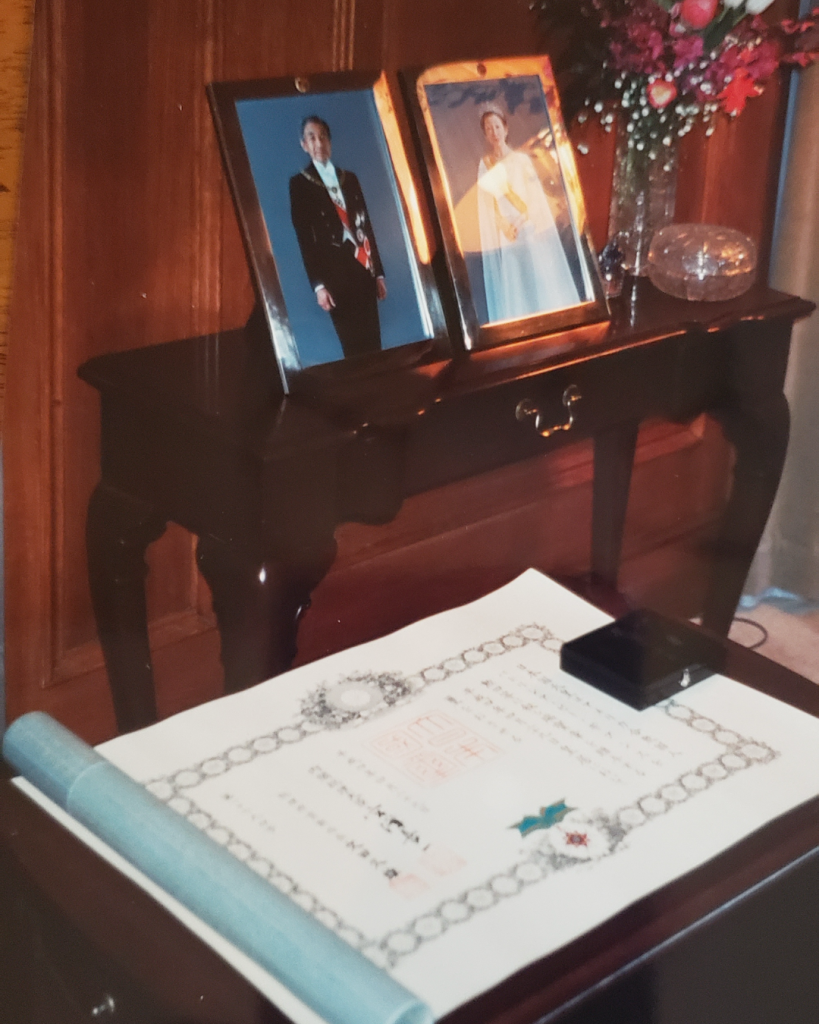
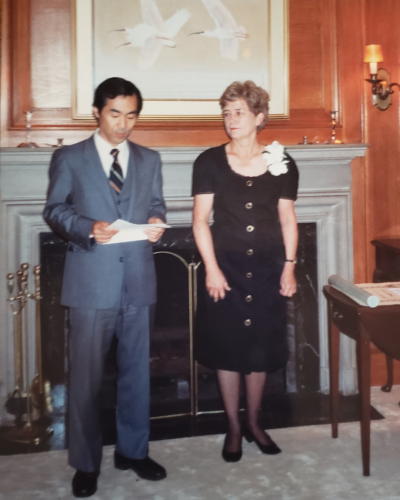
In honor of her extraordinary work in strengthening U.S.–Japan relations, Givens received the Decoration Order of the Sacred Treasure from the Government of Japan—one of the highest honors awarded for exceptional contributions to bilateral diplomacy.

Still, Givens frames her life not through accolades, but through values.

“I’ve always had a desire to understand people,” she said. “Even people I don’t always get along with. That’s what we need now. More global understanding. We might not always call it social work, but that’s what it is.”

In every chapter of her story, Patricia Givens embodies the spirit of social work—not as a job title, but as a way of being. From postwar Tokyo to policymaking circles in Massachusetts, she moved through the world as a connector: of people, cultures, and ideas.

“Don’t rely on screens to understand each other,” she added as a piece of advice. “Meet face to face. Talk to each other. That’s how we build a better world.”

Her story is a reminder that social work doesn’t begin or end at the office door. It lives in every moment someone chooses to listen, to learn, and to take action in service of others.

And in that way, her legacy isn’t just global—it’s timeless.
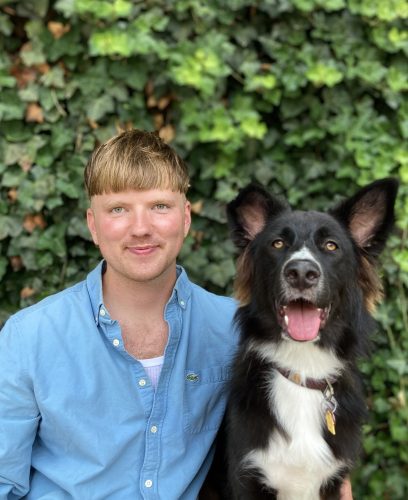
Holden Dillman recognized for community-rooted research on Appalachian youth

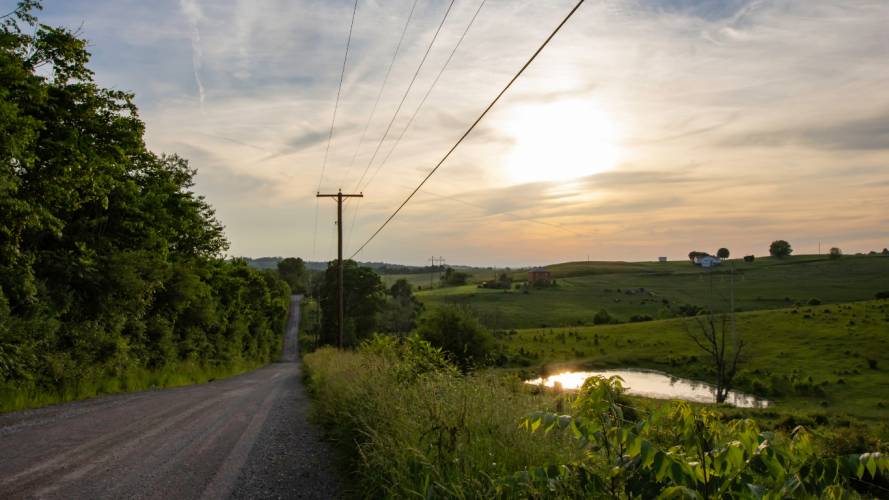
LEXINGTON, Ky.  For too long, the stories of young people in Appalachia have been flattened—portrayed in broad strokes that overlook the complexity of growing up in one of the nation’s most culturally rich regions with historically limited access to resources. One student scholar at the University of Kentucky’s College of Social Work (CoSW) is working to change that. 

Holden Dillman, a doctoral candidate in the CoSW Ph.D. program, community-engaged scholar, and licensed clinical social worker, lives in Eastern Kentucky and provides telehealth psychotherapy to individuals and couples across the state.  

Dillman has been awarded the James S. Brown Graduate Student Award for Research from the UK Appalachian Center & Appalachian Studies program, a recognition that honors research aimed at reframing narratives and lifting voices from the community. 

Dillman’s research, We Are Here, seeks to better understand how early experiences of of being seen, supported, and valued—or the lack thereof— shape long-term mental health outcomes for youth in Appalachia. The project, supported by the award, blends national survey data with in-depth interviews conducted across rural communities, aiming to uncover both challenges and sources of strength. 

“This work is deeply personal,” Dillman said. “Growing up in a small Appalachian town, I often felt invisible. But I also witnessed the quiet forms of connection and resilience that don’t always make it into the headlines. This study is about honoring that complexity.” 

At its core, the project challenges the notion that Appalachian communities are defined solely by hardship. Instead, it spotlights protective factors like belonging, place-based identity, cultural affirmation and others that could inform more effective, locally grounded mental health supports. 

Dillman’s approach urges social workers and policymakers alike to consider not just clinical interventions, but the broader social and environmental systems in which young people come of age. 

“Appalachia is not a monolith,” Dillman noted. “We need research that recognizes the many experiences within the region and moves beyond deficit-based thinking. This study is about expanding the map—both literally and metaphorically—for youth whose voices are too often left out.” 

The James S. Brown Award comes with funding to support participant incentives, ensuring that rural youth who share their stories will be compensated for their time and insight. For Dillman, this is not just a matter of ethics, but of fairness. 

“I believe research should serve the communities it comes from,” Dillman said. “This award affirms that community-driven work matters.” 

As part of the next phase of the project, Dillman is actively recruiting participants across Kentucky and the broader Appalachian region. Those interested in contributing to the study can complete an interest form here: https://uky.az1.qualtrics.com/jfe/form/SV_a5ec2gBWmPc9dMa 

Social work faculty prepare students for policy in practice

LEXINGTON, Ky. Dr. Madri Hall-Faul, assistant professor at the University of Kentucky College of Social Work (CoSW) is helping students explore how social workers shape policy through the rulemaking process. 

Her recent co-authored article, published in Families in Society: The Journal of Contemporary Social Services, explores how federal rulemaking—a process often overlooked in curricula— provides important chances to influence policies that affect the people and communities social workers support. 

In “Federal Rulemaking: An Untapped Arena for Social Work Policy Education and Practice,”  Hall-Faul and co-authors Dr. Emily Loveland of California State University San Bernardino and Dr. Kathryn Libal of the University of Connecticut review case studies in which proposed regulations had the potential to substantively shape policies related to social work practice.  

“Rules are made every day that shape how justice and support are delivered,” said Hall-Faul. “If we’re not part of that process, we’re leaving power on the table.” 

With the recent overturning of the Chevron doctrine by the Supreme Court, the rulemaking process is undergoing a seismic shift. As these changes unfold, the participation of those trained in systems thinking, legal frameworks, and social impact becomes even more critical.  

In her courses, Hall-Faul teaches students how to analyze public comment campaigns and practice crafting persuasive policy messages. The hands-on learning helps bridge theory and practice, supporting students in social work and criminal justice as they engage with real-world policy issues. 

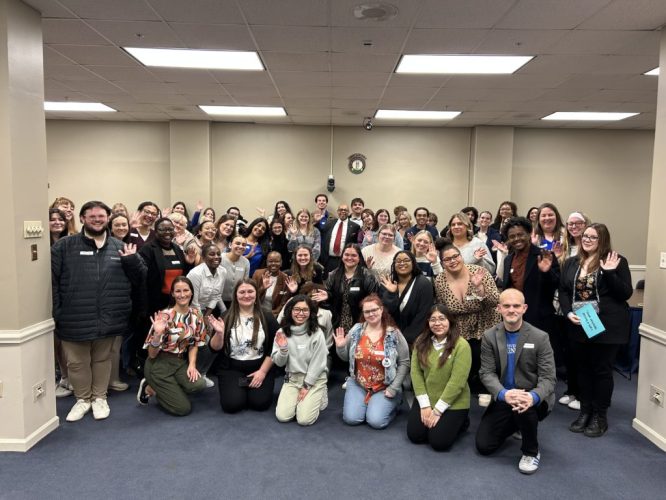
Hall-Faul also plays a significant role in the College of Social Work’s annual participation in Social Work Lobby Day, where students and faculty travel to the Kentucky State Capitol to engage directly with lawmakers on pressing legislative issues.  

“Policy can feel abstract in the classroom—but when students sit across from a legislator and speak from experience, it becomes real. It also helps students realize that legislators are people with whom they can build a relationship” Hall-Faul shares, “That’s where change starts.” 

For more information on the College of Social Work’s programs and initiatives, visit https://socialwork.cornettims.com/

Social Work brings rural perspectives at the center of a National convention 

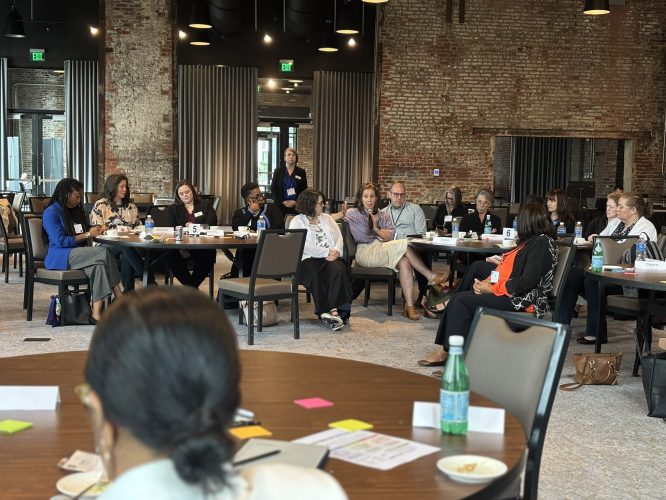
Lexington, Ky. — In a room full of bankers, philanthropists, and national nonprofit leaders, Dr. Diane Loeffler brought something different to the table: the perspective of a social worker. 

Loeffler traveled to Memphis, Tennessee, for the 2025 Rural Investment Summit, hosted by Partners for Rural Transformation. The convening drew voices from across sectors to address persistent underinvestment in America’s rural landscapes—from the hollers of Central Appalachia to Tribal Lands and the Rio Grande Valley. 

Loeffler, a faculty member at the University of Kentucky College of Social Work (CoSW), didn’t just speak on behalf of Kentucky’s flood-ravaged communities. She listened with a trained ear for systems, policy, and the human stakes behind both. 

“I kept thinking, ‘If only banks and philanthropies had social workers on staff,’” she said. “We’re trained to hold systems and people in the same frame—and that’s exactly what this work demands.” 

For Loeffler, the conversation wasn’t only theoretical. In recent years, she’s collaborated with faculty and PhD students across the University to assess disaster recovery systems in Eastern Kentucky, where historic flooding left entire counties underwater—and unmoored. Her research has traced not just the damage, but the delays, the disconnects, the dead ends rural communities face when navigating recovery. 

“Too often, rural communities are asked to solve complex problems without the capital or capacity to support long-term solutions,” she said. “What they need and deserve are multi-year, flexible investments rooted in trust and local leadership.” 

That belief—that rural places are rich in strength but hungry for more structural support—is now embedded in more than just her research. It’s informing how the College prepares the next generation of social workers. 

This year, CoSW launched its Graduate Certificate in Rural Health and Well-Being, a fully online program built for students eager to tackle the layered realities of rural life. From broadband blackouts and transportation gaps to generational trauma and healthcare deserts, the certificate explores the intersections of geography, identity, justice, and care. 

“The challenges facing our rural population are unique and complex,” said Dr. Amanda Brown, Director of the MSW Program and one of the driving forces behind the certificate. “This offering reflects our commitment to preparing students—and building a workforce—equipped to meet those needs.” 

For Loeffler, the connection between summit conversations and classroom instruction is seamless. What she witnessed in Memphis—innovators working across disciplines to reimagine what’s possible for rural America—is the same energy she hopes to ignite in her students. 

“Our students want to do work that matters,” she said. “They want to be part of systems change. And rural communities right here in Kentucky need them. This is where we can make that happen.” 

Social Work launches first-of-its-kind Doctorate Concentration in Sport Social Work

LEXINGTON, Ky. — The University of Kentucky College of Social Work (CoSW) has announced the launch of a Sports Social Work Concentration within its nationally recognized Doctorate of Social Work (DSW) program—the first programmatic offering of its kind in the United States.

Designed in response to the growing mental health needs of athletes and athletic communities, the Sports Social Work Concentration prepares doctoral-level social workers to provide critical support in diverse athletic environments. The concentration also explores the strategic use of sport as a therapeutic and community-building intervention, particularly for youth and clinical populations.

“This concentration represents a bold step forward in advancing the reach and relevance of social work,” said Dr. Laura Escobar Ratliff, Director of the DSW Program. “By entering the world of sport, our DSW scholars are uniquely positioned to influence systems, challenge stigma, and drive meaningful change where it’s urgently needed.”

Housed within CoSW’s Core Plus DSW model, the concentration includes a three-course sequence featuring advanced coursework in sport theory, policy, and practice. Students will be equipped to lead at the intersection of sports, health, and social justice—fields that increasingly demand professionals with specialized, evidence-informed training.

“Social work continues to expand its footprint in nontraditional spaces, and sport is no exception,” said Dr. Jay Miller, Dean of the College of Social Work. “This concentration acknowledges the unique needs of athletic communities and equips social workers with the skills to meaningfully support athletes and their systems.”

The launch of the concentration builds on the momentum of the Sport Social Work Collaborative—a national partnership between the Sport Social Work Research Lab (SSW-RL), the Sport Social Work Journal (SSWJ), and the Alliance of Social Workers in Sports (ASWIS). Together, these organizations advance the field through research, education, and community engagement.

“This new concentration solidifies our role as a national leader in emerging social work specialties,” said Dr. Matt Moore, Associate Dean for Academic and Student Affairs. “Students will gain access to cutting-edge curricula and a network of professionals committed to positively impacting athletes and communities.”

Courses are delivered fully online in an asynchronous format, complemented by a required summer residency week. An asynchronous residency option is also available to provide additional flexibility.

For more information on the DSW Sports Social Work Concentration, visit https://online.uky.edu/doctorate/social-work/dsw.

Alumni Spotlight: Dr. Joelisse Galarza 

Lexington, KY – When Dr. Joelisse Galarza began her doctoral studies at the University of Kentucky, she wasn’t just pursuing a degree—she was refining a vision. 

Already working in clinical and educational settings, Galarza entered the College of Social Work (CoSW) online Doctor of Social Work (DSW) program with a clear objective: to better equip school leaders to address the growing mental health needs of students through research-informed, trauma-conscious approaches. 

“Developing my capstone was a turning point,” Galarza shared. “It helped me connect theory, data, and daily practice in ways that strengthened my leadership and clarified my purpose.” 

Her capstone project, which examined the relationship between adverse childhood experiences (ACEs) and academic outcomes, positioned trauma-informed leadership not as a specialty but as a foundational component of effective school administration.  

Drawing from resiliency theory and ecological systems theory, Galarza crafted a framework to guide educational leaders in fostering school environments where students—and staff—can thrive. 

Galarza’s work didn’t go unnoticed.  

This past May, just ahead of commencement, Galarza was notified that she had been selected as the recipient of the Leadership in Advancing Social Work Practice and Social Justice Award, a national honor presented by the National DSW Conference committee

“Receiving this award is more than just a personal milestone,” she said. “It affirms the importance of my voice and my representation. It honors the invisible labor of pushing for change and affirms my direction in this work.” 

Throughout the program, Galarza balanced her doctoral studies with professional responsibilities across both clinical and school-based settings. That dual engagement, she said, gave her a unique perspective on how research and practice can inform one another in real time. 

“There were nights I’d finish supporting a crisis or a mental health consultation and turn right around to write about leadership responses to trauma,” she said. “The emotional labor was real, but so was the purpose. I knew my research could make a difference, and that kept me going.” 

Now a DSW graduate, Galarza is turning her attention to extending the reach of her work. She aims to continue developing training modules for school districts, mentoring emerging social work leaders, and exploring opportunities to teach at the collegiate level. 

“The DSW program gave me a space to grow intellectually while staying grounded in real-world application,” she said. “It’s one thing to learn new frameworks—it’s another to test them, refine them, and see the difference they make.” 

She credits the faculty at the College of Social Work with fostering an academic environment that supports applied scholarship and collaborative leadership. 

“I’m grateful to the faculty and mentors who helped shape my thinking and supported my goals throughout the program,” she said. “Their guidance allowed me to explore ideas that were both meaningful and practical—ideas I now carry into every space I serve.” 

As Galarza looks ahead, she remains committed to building strong, collaborative relationships with colleagues across education and mental health. 

“I’m proud to be part of a network of professionals who are building out what’s possible in school-based mental health,” she said. “The work is ongoing—and that’s what makes it worth doing.” 

Social Work launches graduate certificate in Rural Health and Well-Being

LEXINGTON, Ky.  — The University of Kentucky College of Social Work (CoSW) is proud to announce the launch of a new Graduate Certificate in Rural Health and Well-Being, designed to prepare social work professionals to serve individuals and communities across Kentucky and beyond.

The certificate, which will be available beginning Fall 2025, is fully online and led by Dr. Amanda Brown, CoSW Master of Social Work Program Director.

From persistent provider shortages to economic barriers and health disparities, rural America faces an evolving set of complex issues. Rooted in the principles of quality care and access, this graduate certificate equips students to address the health, mental health, and social service challenges faced by rural communities.

“The challenges facing our rural population are unique and complex,” said Brown. “This certificate reflects our commitment to preparing students and building a workforce able to meet those needs.”

And that commitment is desperately needed.  

Approximately 93 of Kentucky’s 120 counties are predominantly rural, with nearly 40% of residents living in these areas—almost double the national average. Like rural communities nationwide, these regions often experience limited access to healthcare, education, and other essential services.

The Graduate Certificate in Rural Health and Well-Being offers professionals a way to engage with and support these communities by expanding access and strengthening service delivery. Alongside coursework focused on rural health, students also complete field internships in the very communities they aim to serve.

“Field education is an essential part of this program,” said Brown. “It grounds learning in the lived realities of rural practice and helps foster trust between future providers and the communities they’ll serve.”

These experiences offer students deep insight into local strengths and needs, preparing them to build culturally responsive, relationship-driven solutions that extend beyond the classroom.

For more information, or to express interest in the certificate, contact the College of Social Work Admissions team at coswadmissions@uky.edu. You can also learn more by attending an upcoming virtual information session.