Social Work professor selected for National Mentoring Institute 

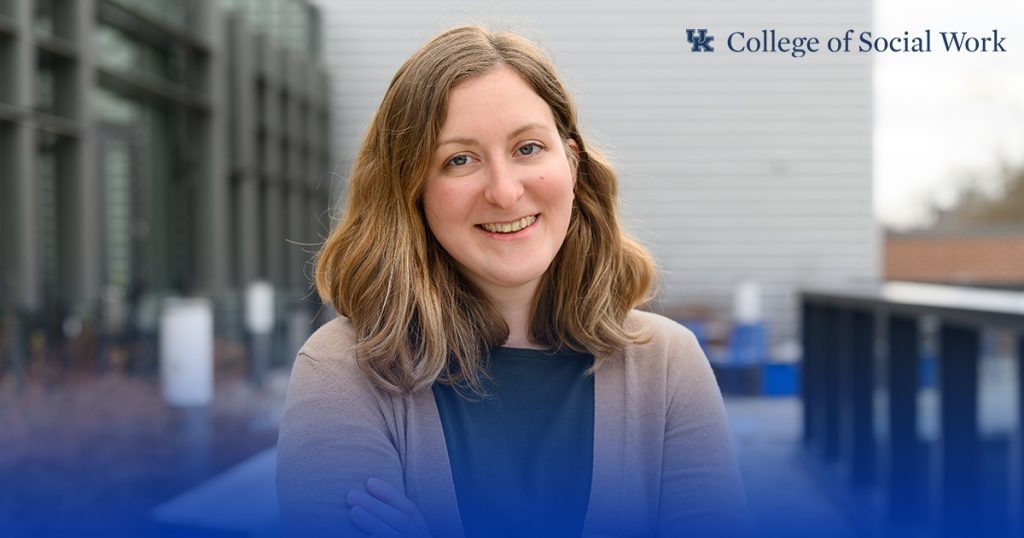
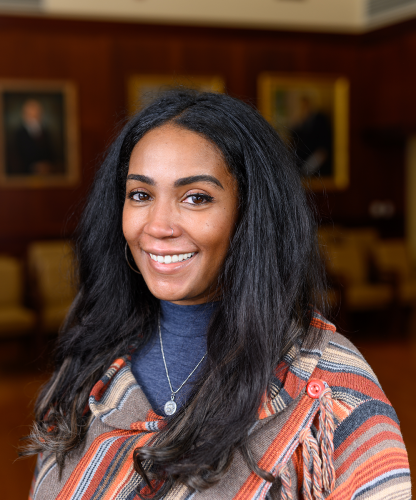
LEXINGTON, Ky. — Dr. Madri Hall-Faul, assistant professor in the University of Kentucky College of Social Work (CoSW), has been accepted into the 2026 National Research Center on Poverty and Economic Mobility Early-Career Mentoring Institute at the UC Davis Center for Poverty & Inequality Research (CPIR)— a prestigious program designed to support emerging scholars committed to addressing poverty and social inequity through innovative research. 

In addition to this recognition, Hall-Faul will co-present at the 2025 Council on Social Work Education (CSWE) Annual Conference next week in Denver. Her session, “Rethinking Policy Practice in Social Work Education—Gaps in Policy Implementation,” will explore how social work education can better prepare practitioners to navigate and influence complex policy environments. Together, these accomplishments reflect Hall-Faul’s growing national profile as a scholar advancing research and practice at the intersection of policy and social justice.

Chosen from a record number of applicants nationwide, Hall-Faul’s selection recognizes her growing influence as a scholar focused on social welfare policy, human rights, and refugee resettlement. Her research explores how policy implementation and administrative decision-making affect the economic and social rights of families experiencing poverty. She is particularly interested in how individuals with lived experience in social welfare systems can participate in shaping and improving those policies. 

“My research on policy implementation through decision-making, regulation, and participation recognizes a gap in social work research and practice” Hall-Faul said. “The Early Career Mentoring Institute will provide me with an opportunity to turn this work into actionable, policy-relevant research that impacts the human services social workers interact with daily.” 

Hall-Faul will also present during the 2025 Council on Social Work Education Annual Conference, “Rethinking Policy Practice in Social Work Education—Gaps in Policy Implementation,” in Denver on Saturday, October 25 at 12:30 p.m. MT. Her session will examine how social work education can evolve to better prepare practitioners to engage in the complexities of policy enactment and reform. 

A dedicated educator, Hall-Faul teaches courses on social policy and research at UK CoSW, guiding students to connect theoretical knowledge with applied community impact. Her scholarly contributions span topics such as Temporary Assistance for Needy Families (TANF) implementation, social work’s involvement in the federal rulemaking process, models of refugee resettlement, and anti-racism in social work education, —demonstrating her commitment to advancing social work’s role in promoting human rights. 

Her publications include: 

Hall-Faul’s recognition is a testament to her dedication, scholarly achievements and the University of Kentucky’s broader commitment to research that strengthens our communities. 

UK College of Social Work to celebrate at CSWE 2025 Annual Conference in Denver 

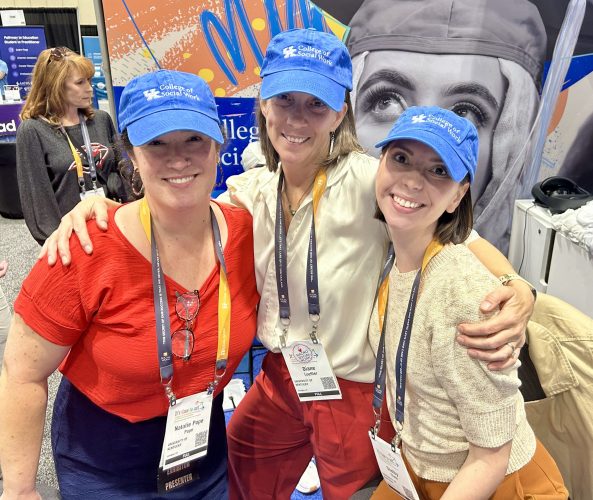
LEXINGTON, Ky. — The University of Kentucky College of Social Work (CoSW) will join thousands of educators, researchers, and practitioners from across the nation at the Council on Social Work Education’s (CSWE) 2025 Conference, to be held October 23–26 in Denver, Colorado. 

The annual conference, centered on advancing social work education and research, will highlight the College’s continued leadership in teaching, scholarship, and service. CoSW faculty, students, and alumni will present research, lead sessions, and receive national recognition for their contributions to the field. 

CoSW Celebration in Denver 
In conjunction with the conference, the College of Social Work will host an in-person CoSW Celebration for alumni, faculty, staff, students, and friends on Saturday, October 25th from 7 to 10pm at Ace. Eat. Serve.  

Guests are invited to connect with colleagues and friends for an evening of food, fellowship, and community. Attendees are asked to RSVP in advance at this link.

Faculty and Student Recognition 
Several CoSW representatives will be honored at CSWE 2025 for their achievements and contributions to social work education. 

Dr. Kathryn Showalter, assistant professor in the College of Social Work, has been named one of the 2025 recipients of the Violence Against Women and Children Manuscript Award by CSWE’s Council on the Role and Status of Women in Social Work Education. The award recognizes early career scholars whose work advances knowledge in the field of violence against women and children. 

In addition to her manuscript award, Showalter, along with CoSW faculty Dr. Laneshia Conner, Dr. Shelita Jackson, and Dr. Kristel Scoresby, will be recognized for their service and mentorship through the same council. 

Crystal Campbell, a current doctoral student in the College’s Online Doctorate of Social Work (DSW) program, has also received a Minority Fellowship Program (MFP) recognition for her leadership in behavioral health and social work education. 

CoSW Self-Care Challenge and Self-Care Suite 
The College will also host an inaugural CoSW Self-Care Challenge during the annual conference. Designed to promote wellness among conference attendees, the challenge invites participants to engage in hands-on self-care activities, earn points, and climb the #CSWESelfCareChallenge leaderboard.  

This challenge takes place within the CoSW’s signature Self-Care Suite, where guests can sign up for chair massages, morning yoga classes, companion walking activities, and opportunities for reflection and connection. Participants who complete activities can earn rewards while contributing to the College’s ongoing research on professional well-being in social work. 

More information about the Self-Care Challenge and the College’s participation in CSWE 2025 is available at socialwork.cornettims.com/cswe-annual-conference.

Reclaiming humanity in the age of AI: how social work can prevent “cognitive debt”

As classrooms across the globe transform under the weight of rapid technological change, one reality is clear: artificial intelligence isn’t coming, it’s already here. According to a 2024 global survey, more than 86% of students now use generative AI tools in their academic work. But while student adoption has accelerated, higher education’s response has varied from institution to institution. Faculty guidance, institutional policy, and ethical frameworks are racing to keep pace with the rapid adoption and evolution of emerging AI technologies.

Dr. Keith J. Watts, assistant professor at the University of Kentucky College of Social Work (CoSW), explains that this widening gap is more than just a pedagogical challenge; it is becoming a growing cognitive and ethical crisis.

“The core issue isn’t the technology use itself, but the pedagogical vacuum it has entered,” Watts explains. “Student adoption has vastly outpaced faculty and institutional guidance, which means the default mode of AI use is naturally driven by the path of least cognitive resistance, emphasizing efficiency over learning. When students use these tools without a structured, critical framework, they’re not just completing tasks; they are accruing a cognitive debt. This debt is a cumulative deficit in the essential skills—critical thinking, ethical reasoning, and nuanced professional judgment—that are the bedrock of social work.”

Understanding “Cognitive Debt”

Watts’ recent paper introduces the concept of AI-induced cognitive debt, a term adapted from clinical neurology that captures what happens when individuals offload too much of their mental processing to external systems. In the classroom, this looks like students using AI to summarize readings, brainstorm papers, structure arguments or complete assignments without engaging in deep reflection.

Over time, this habitual outsourcing depletes necessary critical faculties. In many ways, this depletion is the intellectual equivalent of taking on debt that must eventually be repaid. The student may complete the assignment, but the learning that the assignment was designed to produce does not occur.

“Genuine learning is an act of investment in our own cognitive reserves,” Watts writes. “Every time a student offloads a critical thinking task to an AI without a structured pedagogical purpose, they are incurring an opportunity cost. They miss a vital chance to engage in the effortful thinking that builds durable mental models. This repeated failure to build cognitive assets results in a potentially debilitating cognitive debt.”

In social work education, that loss caries significant professional implications. Because the field depends on ethical decision-making, empathy, and nuanced human judgement, long-term dependence on automation can undermine the very competencies that define effective practice.

Without structured pedagogy to guide AI use, Watts argues, the profession risks producing graduates who can generate text but not reflection, who can analyze data but not meaning.

A Framework for Ethical, Experiential Learning

Rather than banning AI, which Watts describes as untenable, he proposes an experiential learning framework that turns the technology into an object of critical inquiry rather than a shortcut to completion. The model combines Kolb’s experiential learning cycle, Knowles’ andragogy, and the critical pedagogies of Paulo Freire and bell hooks, positioning AI as a mirror for reflection, not a replacement for thought. These theories are not competing alternatives but synergistic layers: Kolb provides the process for learning, Knowles defines the stance of the adult learner, and Friere and hooks provide the critical ethos required to challenge and deconstruct the technology itself.

“Our goal is to make AI the subject of learning—not the substitute for it,” Watts says. “When students use AI to generate something, then critically analyze its biases, revise its assumptions, and align it with social work ethics they’re not offloading cognition; they’re deepening it.”

In practice, this framework transforms classroom activities at every level of social work education:

  • Micro (clinical): Students use AI chatbots for simulated client interviews, then deconstruct the biases in language or cultural framing.
  • Mezzo (organizational): Learners draft AI-generated agency policies, critique their ethical implications, and rewrite them through an anti-oppressive lens.
  • Macro (policy): Students analyze public datasets using AI, then identify whose voices are missing, rewriting narratives to include marginalized perspectives.

These exercises, Watts explains, turn AI into a tool for empathy, justice, and reflection. These frameworks are designed to intentionally shift use of AI from a tool for passive cognitive offloading to an object of active, critical and reflective inquiry.

Aligning AI Literacy with Professional Ethics

Watts’ framework doesn’t just fit within social work ethics—it strengthens it. By directly mapping assignments to the Council on Social Work Education’s Educational Policy and Accreditation Standards (EPAS) and the National Association of Social Workers (NASW) Code of Ethics, the model ensures that critical and ethical reasoning remain at the heart of learning.

“Ethical use of technology is not optional for social workers. It’s an essential part of professional competence,” Watts notes. “We have an obligation to ensure that our students aren’t just technologically capable, but ethically fluent.”

He also encourages institutions to shift from broad or restrictive AI policies toward pedagogically grounded approaches that emphasize transparency, disclosure and skill development as part of responsible innovation.

The Future: A Profession That Thinks Critically and Leads Ethically

For Watts, preparing social workers for an AI-driven world isn’t about teaching them to code or use tools. The goal should be to help them remain profoundly human in the process.

“As AI automates routine tasks, it will only elevate the importance of the uniquely human skills that define our profession, including genuine empathy, sophisticated ethical reasoning, creativity, and the ability to build authentic therapeutic relationships,” he emphasizes. “Social work must lead the charge in reclaiming humanity in the age of automation.”

The framework he proposes offers a blueprint for educators, accrediting bodies, and policymakers seeking to align innovation with integrity. By reorienting AI from a cognitive crutch to a catalyst for critical inquiry, Watts envisions a future where social workers are not only technologically literate but critically conscious and deeply human.

“The question isn’t whether AI will change education—it already has,” Watts concludes. “The question is whether education will rise to meet that change with the critical, human-centered thinking our profession demands.”

About the Author:

Dr. Keith Watts is an assistant professor in the University of Kentucky College of Social Work. Guided by the principals of social justice, his research examines topics including  health,  minority stress, youth violence, and the ethical adoption of artificial intelligence in social work practice and education, with a particular emphasis on advancing outcomes for historically under-resourced communities.  Across his work, he explores how belongingness serves as a protective factor to promote resilience and well-being.

UK social work professor receives national award for research on violence against women and children

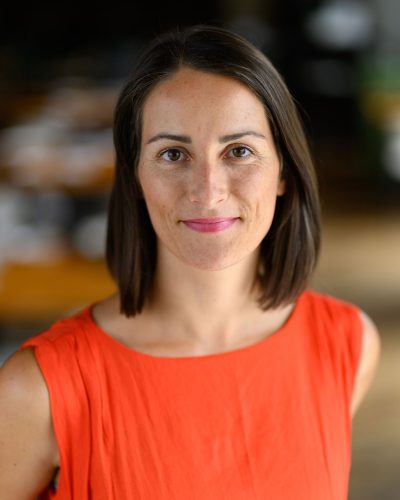
LEXINGTON, Ky. — University of Kentucky College of Social Work (CoSW) faculty member Dr. Kathryn Showalter and her co-authors have been awarded the 2025 Violence Against Women and Children Manuscript Award by the Council on Social Work Education’s (CSWE) Council on the Role and Status of Women in Social Work Education.

This national recognition honors early career scholars whose work most advances knowledge in the field of violence against women and children.

“Inspired by my own mother and grandmothers, academic sisterhood, and lifelong friendships, I’ve long ago dedicated my scholarship to the wellbeing of women,” said Showalter. “To label my work as an advancement in feminist knowledge is validation of my entire career promoting overlapping feminist missions—establishing employment equity and ending intimate partner violence.”

An assistant professor at CoSW, Showalter’s research focuses on the intersection of intimate partner violence (IPV) and employment stability, examining how workplace conditions, childcare subsidies, and workplace policies can reduce risks for survivors and families.

Her scholarship has led to the development of technology-inclusive measures of IPV and abuser-initiated workplace disruptions—tools designed to deepen understanding of how survivors experience abuse across employment sectors.

“Across sectors and demographic groups, my research establishes that survivors need access to work leave, hiring and firing discrimination protection, and access to cash-assistance programs in order to simultaneously leave abusive relationships and maintain their jobs,” she explained. “The next step is to test comprehensive policies as interventions in actual workplaces—an endeavor I’m in process of securing funding to examine.”

In addition to her research, Showalter served as a 2025 Mentor for the Council on the Role and Status of Women in Social Work Education alongside colleagues Dr. Laneshia Conner, Dr. Shelita Jackson, and Dr. Kristel Scoresby. These outstanding individuals have supported emerging scholars in their academic and professional growth in social work education.

“Mentoring the next generation of feminist scholars is one of my greatest achievements,” said Showalter. “Guiding the scholarship of older women, U.S. immigrants experiencing IPV, mothers and children facing housing instability, and households experiencing dual abuse has been beyond rewarding.”

Looking ahead, Showalter plans to establish an Empowerment and Public Policy Lab within the College of Social Work, which will focus on advancing financial and employment policies for IPV survivors through interdisciplinary mentorship and collaborative research.

The Council on the Role and Status of Women in Social Work Education (Women’s Council) raises awareness about the status and contributions of individuals who identify as women in social work education. The council works toward full participation and representation across academia, uplifts the scholarship of women, and facilitates mentorship opportunities for peers, junior faculty, and students.

SPARK program ignites student-faculty research collaborations at UK

LEXINGTON, Ky. – The University of Kentucky College of Social Work (CoSW) is now accepting applications for the Spring 2026 S.P.A.R.K. ProgramStudents Partnering with Academics in Research and Knowledge—an initiative designed to ignite curiosity, expand skills, and connect undergraduates directly with faculty on active research projects. 

S.P.A.R.K. offers a unique opportunity for undergraduate students to bridge classroom learning with hands-on experience. Participants will collaborate with CoSW faculty in areas such as policy analysis, community engagement, and social impact research—all while gaining practical skills that employers and graduate programs value. 

“S.P.A.R.K. was created to help students engage in and contribute to research that truly matters,” said Dr. Jackie Duron, Associate Dean for Faculty Advancement and program coordinator. “Whether students plan to pursue graduate school or enter the workforce, these projects help them build confidence, research knowledge and skills, and community.” 

Students accepted into S.P.A.R.K. will commit approximately five hours per week to their research project. Each participant will meet regularly with their faculty mentor, attend an orientation, and complete a Forager One profile to document progress and connect within the UK research network. 

The program is open to Bachelor of Arts in Social Work (BASW) and Bachelor of Arts or Science in Criminal Justice (BA/BSCJ) students, both on-campus and online. Preference will be given to juniors with a minimum 3.0 GPA. 

Through S.P.A.R.K., students will: 

  • Work side-by-side with CoSW faculty on active research. 
  • Strengthen critical thinking, data analysis, and professional writing skills. 
  • Develop mentorship and networking relationships that last beyond graduation. 
  • Connect their studies to real-world issues that shape communities. 

“This program helps students see how research translates into real-world solutions,” Duron added. “It’s about sparking both professional growth and personal purpose.” 

Prospective applicants are invited to join a virtual information session on October 8 from 11:30 a.m.–12:00 p.m. (EST) to meet faculty and learn about available projects. 

Apply Now 

Applications for the Spring 2026 cohort are open until October 31 at 11:59 p.m. EST. 
Interested students can learn more and apply online: Apply Here. 

College of Social Work Celebrates Excellence at 3rd Annual Recognition Celebration 

On September 25, 2025, the University of Kentucky College of Social Work (CoSW) hosted its 3rd Annual Recognition Celebration at The Carrick House in Lexington. The evening brought together faculty, staff, students, alumni, and community partners for a night of celebration, connection, and recognition of those who have made lasting contributions to the college. 

Honoring Donors and Students 

Director of Philanthropy Ramla Osman opened the recognition portion by celebrating all scholarship donors and recipients. Among those honored in person were: 

  • Kathy Purcell, who established the Brian M. Reber Endowed Memorial Scholarship Fund 
  • Elaine Wilson, CoSW alumni and Board of Trustee member who established the Elaine Wilson Scholarship 
  • Linda Harvey, CoSW alumni and longtime donor  
  • Asha Dudee, recipient of the Reber Scholarship 
  • Shawn Hunter, recipient of the Virginia Marsh Bell Scholarship 
  • Jordin Williams, recipient of the Criminal Justice Women and Philanthropy Scholarship 

“These scholarships represent not just financial support, but a belief in the future of our students,” Osman noted. 

Recognizing Faculty and Staff 

Chief Wellbeing Officer Andrea Deweese recognized retirees, years of service milestones, and employee award recipients. Special recognition was given to Dr. Melanie Otis, who is retiring after more than 25 years of service. 

Faculty and staff milestones spanned from five to thirty years. Honorees who celebrated their years of service with the college were: 

  • 5 years: Amanda Carpenter, Haley Clark, Dr. Laneshia Conner, Alice Edwards, Dr. Laura Escobar-Ratliff, Courtney Leazier, Emily Nichols, Kyle Phillips, Sheila Rentfrow, Kathryn Showalter, Michelle Slone.  
  • 20 years: Dr. Julie Cerel and Dr. Christopher Flaherty.  
  • 25 years: Larry “Jeff” Damron. 
  • 30 years: Gary Trumble. 

The People First, People Always Awards celebrated outstanding faculty and staff contributions: 

  • Xana Plum – Culture of Wellbeing Award 
  • Dr. Aubrey Jones – Culture of Research Award 
  • Dr. Shelita “Dr. J.” Jackson – Outstanding Teacher Award 
  • Josh Nadzam – PTI of the Year Award 
  • Wanda and Michael Holt – Steadfast Service Award 
  • Sally Levings – Outstanding Staff Award 
  • Sarah Orr – Supervisor of the Year Award 

Celebrating Student Excellence 

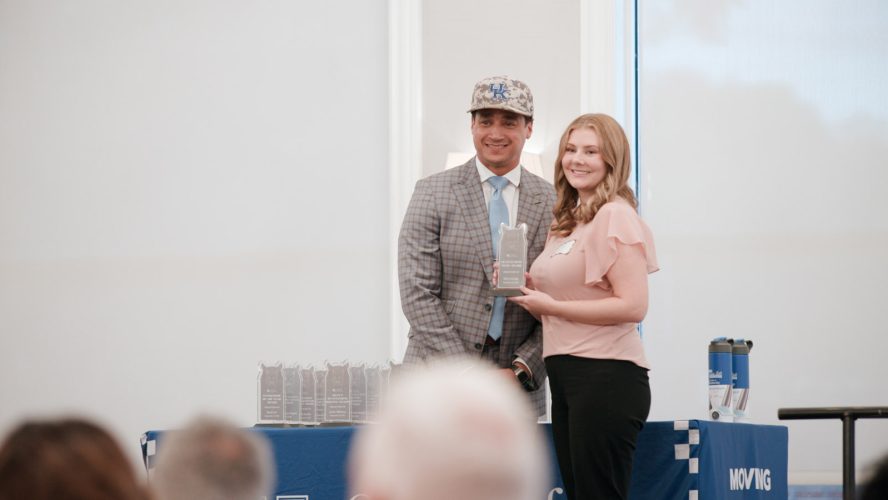
Director of Student Experience and Engagement Dr. Kayla Powell recognized members of the Dean’s Student Advisory Council and presented the inaugural College of Social Work Student Awards, launched in Spring 2025. 

Student award recipients included: 

  • CPT Amanda Veen – Army MSW Program Award 
  • Shawn Hunter – Outstanding Undergraduate Student 
  • Brianna Hinton – Outstanding Graduate Student 
  • Dr. Lila Elliott – Outstanding Doctoral Student 
  • Olivia Stanley – Experiential Learning Student of the Year 
  • Jordin Williams – Dean’s Outstanding Service Award 

“These students embody the mission of social work—serving, uplifting, and advocating for others,” Powell said. 

Alumni Recognition 

The College of Social Work Alumni Association (SWAA), established in 2022, highlighted the contributions of its Executive Advisory Committee and recognized alumni leaders through the 2025 SWAA Awards

  • Eddie Mann – Outstanding Experiential Learning Instructor Award 
  • Dr. Joelisse Galarza (DSW ’25) – “You Were Built for This” Award 
  • Olivia Raley (MSW ’25) – Rising Star Award 
  • Katie Wolf Whaley (MSW ’03) – Alumni Excellence Award & Hall of Fame Inductee 

“Thousands of alumni represent the college in communities every day, and tonight’s honorees showcase the very best of that impact,” Osman said. 

Closing the Evening 

In his closing remarks, Dean Jay Miller reflected on the significance of the evening: 

“The College of Social Work is a special place thanks to all of you. Whether you are a student, faculty member, staff member, alumnus, or supporter, your contributions shape our mission and ensure we continue to improve the human condition—always, in all ways.” 

The evening concluded with a reception and continued celebration among honorees, guests, and members of the CoSW community. To see more photos of the event, please visit https://socialwork.cornettims.com/highlights-2025-annual-recognition-celebration/.

Celebrate Homecoming 2025 with the College of Social Work

Lexington, Ky. – The University of Kentucky College of Social Work (CoSW) and the College of Social Work Alumni Association (SWAA) invite alumni, students, faculty, and staff to participate in a week-long celebration of community, connection, and Wildcat pride during UK Homecoming 2025.

Taking place from October 13–18, the College’s events will include both in-person and online opportunities designed to bring together members of the CoSW community.

Homecoming Pop-Up Shop
October 13–27, 2025 | Online

The SWAA Homecoming 2025 Pop-Up Shop will feature exclusive College of Social Work apparel and merchandise. This online event provides an opportunity for alumni, students, faculty, and staff to show their Wildcat spirit and support the College. Items for purchase will be shipped directly.

Swag Cab (with UK Alumni Association)
October 13–17, 2025 | In-person and Online

Throughout the week, the Swag Cab will travel across campus, offering students a ride to class and a chance to win prizes by answering College of Social Work trivia questions.

Students and alumni not on campus can participate virtually by following the College’s Facebook and Instagram pages. Daily trivia questions will be shared through social media stories, and all participants who answer correctly will have a chance to recieve a unique piece of CoSW swag.

Lunch and Learn: Coming Home to Sport Social Work
October 16, 2025 | 12–1 p.m. (ET) | Virtual via Zoom

This virtual Lunch and Learn will introduce participants to the emerging field of sport social work. Using Homecoming traditions as a focal point, the presentation will explore how sport can serve as a platform for fostering belonging, connection, and community well-being.

The discussion will also highlight current initiatives within the College, including the International Institute for Sport and Behavioral Health and the Sport Social Work Research Lab, which are advancing research in college student-athlete mental health, developing new educational pathways such as the Doctorate of Social Work (DSW) concentration in sport social work, and creating community-based practicum opportunities.

Featured presenters include:

  • Dr. Tarkington Newman, Director, International Institute for Sport and Behavioral Health
  • Dr. Carlyn Kimiecik, Co-Director, Sport Social Work Research Lab

Participants may be eligible to receive 1.0 continuing education (CE) credit.
Registration for the event is required.

Golden Wildcat Society Induction Dinner and Pinning Ceremony (with UK Alumni Association)
October 16, 2025 | 6 p.m. | Longship Club at Kroger Field, 1540 University Drive

The Golden Wildcat Society Induction Dinner will honor members of the Class of 1975, recognizing 50 years of connection to the University of Kentucky. The evening will include a formal dinner, reception, and pinning ceremony.
Register here.

Lyman T. Johnson Awards & Luncheon
October 17, 2025 | In-person

The University of Kentucky will host the Annual Lyman T. Johnson Awards & Luncheon at the Gatton Student Center Grand Ballroom on October 17th, 2025. Two CoSW awardees will be recognized. Read more about this year’s CoSW awardees and their accomplishments in the full announcement: Social Work Celebrates 2025 Lyman T. Johnson Award Recipients.

Tailgate Tent Party (with UK Alumni Association)
October 18, 2025 | Tobacco Research Lawn, 1401 University Drive | Time TBA (Pending Kickoff)

The celebration will conclude with the Homecoming Tailgate Tent Party as the Wildcats face off against the Texas Longhorns. Attendees can enjoy classic tailgate food, entertainment, games, and performances by the UK Cheerleaders and Pep Band.
Register here.

Join the Celebration

For full event details, registration links, and updates, visit the College of Social Work Homecoming webpage.

Social Work celebrates recipients of the 2025 Lyman T. Johnson awards

LEXINGTON, Ky. (October 2025) — The University of Kentucky College of Social Work (CoSW) is proud to announce the 2025 recipients of the Lyman T. Johnson Awards. This year, BASW alumna and faculty member Dr. Laneshia Conner has been named the Torch of Excellence Award recipient, and BASW student Aniyah Maxey has been named the Torch Bearer Award recipient. 

The awards will be presented during the 2025 Lyman T. Johnson Awards Luncheon on Friday, October 17, from 11:00 a.m. to 1:00 p.m. in the Gatton Student Center Grand Ballroom.

The Lyman T. Johnson Torch of Excellence Award honors alumni whose values, faith, hard work and determination have positively impacted the lives of people on UK’s campus, the city of Lexington, the Commonwealth, and/or the nation. The Torch Bearer Award recognizes students whose academic achievement and ability have positively impacted the lives of others.  

Both honors are named for Lyman T. Johnson, the civil rights pioneer who in 1949 became the first African American to enroll at the University of Kentucky, opening the doors for generations of students and scholars. 

About the 2025 Recipients 

  • Dr. Laneshia Conner – Torch of Excellence Award 
    Dr. Conner, an assistant professor in the College of Social Work, is nationally recognized for promoting health equity and HIV prevention for older Black women through community-led solutions. Most recently, she was awarded a five-year, $635,000 grant from the National Institutes on Aging to develop and refine Woman to Woman (W2W)—a culturally tailored HIV prevention intervention for older Black women, an often-overlooked population. The project provides pilot data and professional development to support a future large-scale clinical trial. As part of her commitment to interdisciplinary collaboration and advancing racial health equity, Dr. Conner also received a UK UNITE Humanities Pilot Grant—an initiative supporting research teams across career stages to address racial disparities and generate sustainable, extramurally funded projects. 
  • Aniyah Maxey – Torch Bearer Award 
    Maxey, a student in the College of Social Work, exemplifies the spirit of leadership and service that defines the Lyman T. Johnson legacy. Earlier this year, Maxey received the “30 under 30” award during UK’s Sarah Bennett Holmes Luncheon and was named as a Student Government Association Student of the Month. 

“We are thrilled to celebrate Dr. Conner and Ms. Maxey as this year’s recipients of the Lyman T. Johnson Awards,” said Ramla Osman, director of philanthropy at CoSW  “Both have demonstrated extraordinary commitment to scholarship, leadership, and service, and they embody the spirit of excellence and perseverance that these awards represent.” 

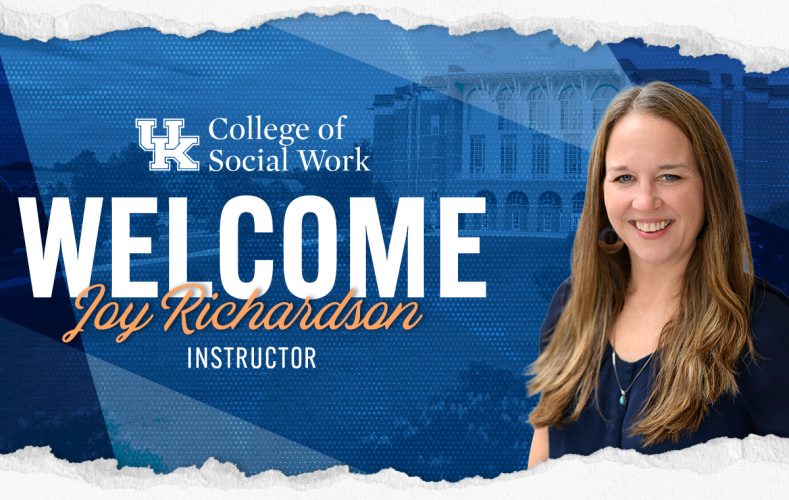
College of Social Work Welcomes Dr. Joy Richardson as Clinical Instructor 

LEXINGTON, Ky. — The College of Social Work (CoSW) is proud to welcome Dr. Joy Richardson as a Clinical Instructor to the University of Kentucky. 

With more than two decades of social work practice across the country, Richardson brings a deep commitment to youth and families, educational well-being, and justice-driven trauma-informed care. Her professional journey spans leadership roles in child welfare systems, higher education, and psychotherapy.  

Notably, Richardson spent twelve years at Seneca Family of Agencies in the San Francisco Bay Area, where she supported multi-stressed youth and their families in partnership with mental health and child welfare systems. 

An alumna of the UK College of Social Work’s Doctorate of Social Work (DSW) program, Richardson’s research centers on social work education and professional formation—specifically the sustainability and support of emerging social workers. She also holds degrees from the University of Georgia and Pacific School of Religion, and is a Licensed Clinical Social Worker in California, Colorado, and Illinois. 

“Joy’s unique background, her dedication to families, and her commitment to future social workers will be a great benefit for our learning community,” said Dr. Jackie Duron, Associate Dean of Faculty Advancement. “We are thrilled to welcome her back to CoSW in this new role.” 

In addition to her academic and clinical credentials, Richardson is a yoga teacher, adult development facilitator, and musician—having attended the University of Georgia on a clarinet scholarship. 

To learn more about Dr. Richardson’s work, visit her LinkedIn profile

Social work researcher secures grant to advance community health for older adults

LEXINGTON, — Laneshia Conner, Ph.D., an assistant professor in the University of Kentucky’s College of Social Work (CoSW),has been awarded a five-year, nearly $615,000 grant from the National Institute on Aging (NIA), part of the National Institutes of Health (NIH).

The funding will support Conner’s study, “Feasibility, Acceptability, and Preliminary Efficacy of an HIV Prevention Intervention for Older Black Women.”

“This project is about making sure older Black women — whose voices have too often been overlooked in health research — are not just included, but centered,” said Conner. “It’s about raising awareness, building visibility and ensuring that real resources are directed toward the health needs of this community.

This type of grant, the NIA’s Mentored Research Scientist Development Award, also provides support for an intensive, mentored career development experience in the biomedical, behavioral or clinical sciences leading to research independence.

The NIA-funded study will pilot and evaluate tailored interventions developed in collaboration with community partners, ensuring that findings are both rigorous and sustainable in real-world settings.

Conner developed this project during her time as a scholar trainee in the Kentucky Building Interdisciplinary Research Careers in Women’s Health (BIRCWH) Program, which provides in-depth mentoring and training for scholars pursuing independent research careers in women’s health.

This award underscores Conner’s national leadership in advancing health education for aging populations and builds upon her growing body of research focused on sexual health and wellness among older adults.

“Dr. Conner is a recipient of the UK UNITE Humanities Pilot Grant, and she has received recognition from the Society for Social Work and Research, among other accolades,” said Jackie Duron, Ph.D., CoSW associate dean for faculty advancement. “We are proud to celebrate her commitment to innovative scholarship that meaningfully supports our communities.”

Research reported in this publication was supported by the National Institute on Drug Abuse of the National Institutes of Health under Award Number K12DA035150, and by the National Institute on Aging of the National Institutes of Health under Award Number K01AG092253. The content is solely the responsibility of the authors and does not necessarily represent the official views of the National Institutes of Health.