
SEARCH RESULTS FOR:

Search Results

Inside the clutch March Madness moment: Expert Q&A on high-pressure play

LEXINGTON, Ky. (March 16, 2026) — When the clock ticks down and a game hangs in the balance, some athletes thrive while others falter.

March Madness is full of buzzer-beaters and heart-stopping moments, but what separates a player who rises to the occasion from one who freezes under pressure?

Matt Moore, Ph.D., associate dean of academic and student affairs in the UK College of Social Work, brings nearly two decades of competitive tennis coaching experience to the question. He is co-founder and president of the Alliance of Social Workers in Sports, editor of the Sport Social Work Journal and co-director of the International Institute for Sport and Behavioral Health.

Moore has coached at Butler University, Anderson University and Miami University, racking up more than 250 career dual match wins and helping Miami claim the 2025 Mid-American Conference championship.

But high-stakes moments aren’t just psychological — they are also neurological. Understanding how the brain processes stress, focus and split-second decision-making adds another layer to why some athletes stay composed while others struggle when the stakes are highest.

That’s where Taylor Achtyl, Psy.D., a postdoctoral fellow in clinical neuropsychology in the UK College of Medicine, offers insight into what’s happening inside the brain during those critical moments. She works within the Kentucky Neuroscience Institute, where she conducts neurocognitive evaluations to assist in the diagnosis of neurological disorders.

Achtyl earned her doctorate in clinical psychology from D’Youville University, where her dissertation research examined executive function and emotion regulation in university athletes with a history of sports concussion; this work was presented at the International Brain Injury Association’s 15th World Congress on Brain Injury. She also has experience conducting neurocognitive evaluations to inform return-to-play decisions and providing psychotherapy to student-athletes.

UKNow: Why do some athletes seem to thrive under pressure while others struggle?

Moore: Some athletes interpret physical signs of stress as excitement and readiness, while others read the same signals as doubt, overthinking and tightness. Though the shift in mindset may sound simple, it’s more complex than it seems. Often, the difference between rising to the moment and shrinking from it comes down to seeing pressure as a challenge rather than a threat.

UKNow: What actually happens in the brain and body during a high-pressure moment like a last-second shot?

Achtyl: In a high-pressure moment like a last-second shot, the brain quickly prioritizes information that is most relevant to the situation. Attention narrows toward key cues such as the position of defenders, the basket and the remaining time on the clock. Brain regions involved in decision-making and motor planning work together to translate that information into a rapid action. At the same time, the body becomes more physiologically activated, increasing alertness and readiness to move.

Moore: The first thing that happens is that your brain realizes, “these moments matter.” This activates a response in your body. Your adrenaline kicks in. Your heart beats faster. Your breathing speeds up. Your muscles tighten. Your focus gets sharper. You might also feel nervous. 

UKNow: Is being “clutch” a real psychological trait, or is it something we assign after the fact?

Moore: When you’re in high-pressure moments, there’s a difference between your body feeling clutch and feeling frozen. A clutch athlete might think, “I’m ready for this,” channeling that energy in a positive way. An athlete who feels frozen might think, “Not me — I’m nervous,” which can lead to overthinking and tightening up.

Most of the time, we label someone clutch after we see the outcome. In reality, being clutch is about preparation, repetition and confidence built over time. In my opinion, it has far less to do with who you are and far more to do with how you train your body and mind to handle pressure.

Science + storytelling

UKNow: What role do stress hormones like cortisol and adrenaline play in performance?

Achtyl: Adrenaline and cortisol are part of the body’s natural response to pressure. When stakes are high, such as during the final minutes of a close game, these hormones increase heart rate, blood flow and alertness, preparing the body to respond quickly. Stress hormones can enhance performance by helping athletes sharpen focus and reaction time, which is why athletes often describe feeling “locked in” during important moments. However, when stress hormone levels become too high, they can start to interfere with performance. It may become more difficult to concentrate, remember plays or control fine motor movements.

UKNow: How does anxiety affect motor skills and decision-making in athletes?

Achtyl: Anxiety can interfere with athletic performance by affecting the brain systems that coordinate thinking and movement. Skilled motor actions rely on communication between the prefrontal cortex, which supports attention and decision-making, and the striatum, which helps automate well-practiced movements. In high-pressure situations, stress and increased self-monitoring can disrupt this coordination — causing athletes to overthink movements that would normally feel automatic, such as passing or shooting a ball. When that happens, decisions may become slower and movements less fluid, which is often what people are describing when they talk about athletes “choking” under pressure. Athletes who perform well in these moments are often better able to maintain focus and allow practiced skills to run more automatically.

UKNow: Can pressure ever improve performance? If so, how and why?

Achtyl: Yes, pressure can improve performance. A moderate level of pressure can increase focus, motivation and engagement with the task at hand. In these moments, athletes may become more attentive to relevant cues, react more quickly and perform with greater intensity. Psychological research often describes this relationship using the idea that performance tends to improve as arousal increases, but only up to a certain point. When pressure stays within this optimal range, it can help athletes feel energized and fully focused on the moment.

Moore: Building on everything shared so far, the body’s stress response isn’t automatically a bad thing. Adrenaline can sharpen focus, increase energy and prepare muscles to respond quickly. When athletes interpret those sensations as readiness rather than danger, pressure can actually enhance concentration, reaction time and confidence.

The difference comes down to perception and preparation. When pressure is viewed as a challenge and athletes trust their training, it can elevate performance. When pressure is viewed as a threat, that same stress can lead to tension, doubt and overthinking.

Training + preparation

UKNow: Are clutch performers born that way, or can mental toughness be trained?

Moore: Mental toughness is not something you are simply born with. It is a skill that can be developed through intentional practice. It grows when you set clear, achievable goals and challenge yourself to perform under pressure. It grows by learning to manage stress and maintain focus. It grows with integration of evidence-based approaches into your practice regime. Practices such as positive self-talk, visualizing successful outcomes and reflecting on your experiences all strengthen your ability to stay calm and confident when faced with obstacles. Most importantly to me, you have to be able to simulate high pressure moments consistently in your training.

UKNow: What psychological techniques do elite athletes use to stay focused in big moments?

Moore: There are numerous techniques that elite athletes use. What works for one athlete might not work for another. That being said, there are three overarching techniques that I use with my athletes. First, we try to be really intentional with our goal setting. This might also be the social worker in me, but I want my athletes to all have SMART goals — specific, measurable, achievable, relevant and time-bound) that help them stay focused on the controllables. Second, we use mental imagery on a regular basis to rehearse high-pressure scenarios. Third, we try to ensure that each of our players have techniques that help with emotional regulation. Here we are talking about preperformance routines, consistent routines between points and how to utilize changeovers to your advantage. I find these three approaches work together. Clear goals provide direction, rehearsal prepares execution and emotional regulation keeps performance steady.

UKNow: How important are routines, like free-throw rituals or breathing patterns, in managing pressure?

Moore: I find routines to be extremely important. By engaging in familiar actions like free-throw rituals or breathing patterns, an athlete can shift their mind from the stress of the situation to controlled, automatic behavior. It helps to remind an athlete that they have shot thousands of free throws in their lives. Why does this free throw need to be any different than the rest?

Fans + broader relevance

UKNow: Why do fans feel nervous or stressed watching these moments — even though they’re not playing?

Moore: I am a fan of many teams. I am no different than others. There are days where it feels like I live and die by outcomes. Fans live vicariously through the team and athletes they support. The pressure created on the court extends to those watching. The brain and body responses of a fan, to a lesser degree, can mirror those of the players. Their investment in the outcome creates a sense of personal pressure, even without direct physical involvement.

Achtyl: Even when we’re just watching, our brains respond to the tension of the moment. In close games, the brain’s stress response can activate in ways that look similar to what the athletes are experiencing. Part of this response is related to mirror neurons — a system in the brain that helps us simulate and understand the actions and emotions of others. When we watch an athlete take a high-pressure shot, the brain partially mirrors the action and emotional intensity of that moment. That shared neural response is part of what makes big moments in sports feel so exciting and nerve-wracking for fans.

UKNow: What can everyday people learn from athletes about handling pressure at work or in life?

Moore: Here are a few suggestions:

  1. Focus on controllable actions, not outcomes. Athletes are great at breaking tasks into small, actionable steps to reduce anxiety and to stay present.
  2. Develop consistent routines. Athletes perform best with consistent rituals. These rituals help regulate behavior and provider a sharper focus.
  3. Reflect and learn from experiences. Athletes are required to consistently reflect on what worked and what did not. It helps athletes to create concurrent plans that present option versus the need to feel desperate in a situation.

As the state’s flagship, land-grant institution, the University of Kentucky exists to advance the Commonwealth. We do that by preparing the next generation of leaders — placing students at the heart of everything we do — and transforming the lives of Kentuckians through education, research and creative work, service and health care. We pride ourselves on being a catalyst for breakthroughs and a force for healing, a place where ingenuity unfolds. It’s all made possible by our people — visionaries, disruptors and pioneers — who make up 200 academic programs, a $476.5 million research and development enterprise and a world-class medical center, all on one campus.

National Adoption Month: Pathways to Permanency

By: Emily Hendrickson, Adoption Support for Kentucky Program Coordinator

A call to honor youth by strengthening pathways to permanency

“I just wanted a family who wouldn’t give up on me.”

When a Kentucky teenager spoke these words, they cut through all the bureaucracy, all the statistics, all the well-meaning policies that make up our child welfare system. In one simple sentence, this young person articulated what National Adoption Month is truly about: the fundamental human need to belong.

This November, as we observe National Adoption Month under the theme “Honoring Youth: Strengthening Pathways for Lasting Bonds,” we must ask ourselves a difficult question: Are we truly listening to what young people in foster care are telling us?

The Reality Behind the Numbers

Right now, 8,647 Kentucky children are living in out-of-home care. More than 2,200 of them cannot safely return to their birth families and need adoptive homes. The average child enters care at age seven and remains there until age ten. These aren’t just statistics—they’re childhoods marked by uncertainty, transitions, and the exhausting work of wondering if anyone will commit to staying.

But there’s another number that tells a different story: More than 55,000 Kentucky children are being raised by kinship caregivers—grandparents, aunts, uncles, and family friends who stepped up when children needed them most. Our kinship care rate stands at twice the national average, reflecting something deeply rooted in Kentucky culture: when family needs help, we answer.

So why do thousands of children still wait?

What Youth Really Need

Having worked alongside the child welfare community, I’ve learned that young people in foster care are experts in their own experiences. They understand something that sometimes gets lost in paperwork and court dates: permanency isn’t about a legal status. It’s about people who show up consistently, who stay through difficult moments, who commit to being there for the long haul.

The Adoption Support for Kentucky (ASK) program, based at the University of Kentucky College of Social Work, operates from this understanding. ASK recognizes that adoption isn’t the end of a story—it’s the beginning of a lifelong relationship that requires ongoing support. Through peer-led groups, trauma-informed training, and the Kentucky Adoption Mentoring Program (KAMP), ASK helps families not just survive, but thrive together.

This matters because many families enter adoption with tremendous love but may not fully understand the impact of trauma, loss, and attachment challenges that children in foster care have experienced. Good intentions aren’t enough. Families need preparation, support, and connection with others who understand the journey.

The Power of Voice

Research shows that when young people participate meaningfully in decisions about their futures, outcomes improve dramatically. Better matches. More stable placements. Greater satisfaction for everyone involved. This isn’t surprising—would any of us want the most important decisions of our lives made without our input?

Yet too often, we make plans for youth rather than with them. Honoring youth means recognizing them as partners in their own permanency journey, not simply as recipients of services. It means creating space for them to express their fears, hopes, and needs without judgment. It means teaching caregivers how to have difficult conversations and honor a child’s past while building a future together.

A Call to Action

National Adoption Month shouldn’t be just about celebration—it must be a call to action. Every Kentuckian has a role to play in strengthening pathways to permanency.

If you’ve considered adoption or foster care, now is the time to learn more. Attend an ASK training or support group. The need is particularly urgent for families willing to adopt school-age children and teens—the young people most likely to age out of the system without permanent families.

If you’re already an adoptive or kinship caregiver, consider mentoring through KAMP. Your experience and wisdom could be exactly what another family needs to persevere through challenges.

If you’re a community member, educator, or advocate, champion trauma-informed, youth-centered policies in your sphere of influence. Share positive adoption stories to reduce stigma and inspire others.

The Kentucky We Can Build

Behind every statistic lives a story. Within every story lives a child with dreams, strengths, and an innate desire to belong. The question isn’t whether these young people deserve forever families—of course they do. The question is whether we, as a Commonwealth, will rise to meet this need.

Kentucky has a strong foundation of family-centered care and a culture of kinship support that runs deep. We have dedicated professionals, evidence-based programs, and compassionate caregivers already doing this work. What we need now is more of us stepping forward—not because it’s easy, but because it’s necessary.

The work of honoring youth extends far beyond November. It’s a daily commitment to listening to young people, believing in their potential, and ensuring they have the support and permanency they need to flourish. It’s about creating a Kentucky where no child ages out alone, where every young person can find what they’ve been seeking all along: a family who will never give up on them.

That teenager’s words still echo: “I just wanted a family who wouldn’t give up on me.”

Kentucky’s children are waiting. Will we answer?

To learn more about adoption, foster care, or kinship support in Kentucky, visit the Adoption Support for Kentucky (ASK) website or visit your local Department for Community Based Services office.

National Adoption Month: Strengthening Pathways for Lasting Bonds in Kentucky

By: Emily Hendrickson, Adoption Support for Kentucky Program Coordinator

Every November, National Adoption Month invites us to pause and reflect on the transformative power of family, connection, and belonging. It’s a time to celebrate the courage of children waiting for permanent homes, honor the dedication of families who open their hearts, and recognize the professionals and advocates who work tirelessly to bring them together. This year’s theme, “Honoring Youth: Strengthening Pathways for Lasting Bonds,” places young people in foster care at the center of the conversation—where they’ve always belonged.

In Kentucky, this mission comes to life through collaboration and commitment. The Department for Community Based Services (DCBS), the University of Kentucky College of Social Work, and the Adoption Support for Kentucky (ASK) program work hand in hand to ensure every young person finds not just a home, but a permanent place to belong. These partnerships demonstrate that honoring youth begins with one essential practice: listening to their voices, understanding their needs, and then taking meaningful action to support their journeys toward permanency.

The Heart of the Matter: Youth Voices in Kentucky

Honoring Kentucky’s youth starts with creating space for their stories and recognizing the wisdom they carry. Young people in foster care understand a profound truth that sometimes gets lost in systems and procedures: permanency transcends paperwork and court dates. It is about people who show up consistently, who stay through difficult moments, and who commit to being there for the long haul.

“I just wanted a family who wouldn’t give up on me,” shared one Kentucky teen whose words have resonated throughout the child welfare community. These simple yet powerful words encapsulate the essence of National Adoption Month, celebrating the remarkable resilience of young people while forging the lasting bonds that honor each child’s individual journey, needs, and dreams for the future.

When we truly honor youth, we recognize that they are experts in their own experiences. They know what it feels like to wait, to hope, and sometimes to have those hopes disappointed. They understand the difference between temporary placements and permanent commitment. And they can teach us, if we’re willing to listen, about what they need to heal, grow, and thrive in forever families.

Kentucky’s Adoption Landscape: Understanding the Need

The scope of Kentucky’s commitment to children and families reveals itself in these key figures, each one representing a young person with their own story, strengths, and needs:

  • 8,647 children are currently in out-of-home care across the Commonwealth, each waiting for the stability and security they deserve.
  • 2,248 children have adoption as their permanency goal, meaning they cannot safely return to their birth families and need adoptive homes.
  • 7 years old is the average age at which children enter care. A reminder that many have already experienced years of instability before entering the system.
  • 10 years old is the average age of children currently in care, highlighting the need for families willing to adopt school-age children and teens.
  • More than 55,000 children across Kentucky are being raised by kin or fictive-kin caregivers, grandparents, aunts and uncles, family friends, and other adults who stepped forward when children needed them most. This remarkable figure stands as a powerful testament to the strength of community bonds and the tradition of extended family support that runs deep in Kentucky culture.
  • Kentucky’s kinship care rate stands twice the national average, reflecting the state’s deep-rooted culture of family resilience, community support, and the willingness of relatives to provide safe, loving homes for children when parents cannot.

These numbers tell us that while the need is significant, so too is Kentucky’s response. The Commonwealth has built a foundation of family-centered care that recognizes the importance of keeping children connected to their communities, cultures, and families whenever possible.

ASK: Creating Foundations for Forever Families

The Adoption Support for Kentucky (ASK) program, based at the University of Kentucky College of Social Work, serves as a cornerstone of support for adoptive, foster, and kinship families throughout the Commonwealth. Founded on evidence-based practices and the lived experiences of adoptive families, ASK operates from a fundamental understanding: adoption isn’t the conclusion of a story—it’s the opening chapter of a lifelong relationship that requires ongoing nurturing, support, and understanding.

Many families enter adoption with love, dedication, and good intentions, but may not fully understand the impact of trauma, loss, and attachment challenges that many children in foster care have experienced. ASK bridges this gap by providing education, resources, and connection to help families not just survive, but thrive together.

Through a comprehensive statewide network, ASK provides:

  • Peer-led support groups that connect adoptive and kinship families with others who truly understand their journey. These groups create safe spaces where caregivers can share challenges, celebrate victories, and find solidarity with others navigating similar experiences. There’s profound power in knowing you’re not alone.
  • Continuous training opportunities grounded in trauma-informed, adoption-competent care practices. These educational offerings help caregivers understand the “why” behind challenging behaviors, develop effective parenting strategies, and build stronger, more connected relationships with their children. Topics range from understanding trauma and attachment to navigating adolescence and supporting educational success.
  • The Kentucky Adoption Mentoring Program (KAMP), which pairs families new to adoption with experienced mentors who have walked the path before them. These mentoring relationships provide practical guidance, emotional support, and the reassurance that comes from learning from someone who has faced similar joys and challenges.
  • Strategic partnerships with DCBS and Aetna Better Health of Kentucky to strengthen outcomes for families across the state. These collaborations ensure that families have access to the services, support, and resources they need throughout their adoption journey and beyond.

ASK recognizes that supporting families means supporting the children in their care. When caregivers have the knowledge, skills, and support they need, children benefit through more stable placements, stronger attachments, and better long-term outcomes.

Elevating Youth Voice in the Permanency Process

Research consistently demonstrates that when young people participate meaningfully in decisions about their futures, outcomes improve dramatically. Youth engagement isn’t just a nice idea; it’s the best practice that leads to better matches, more stable placements, and greater satisfaction for both youth and families.

Programs like ASK and KAMP equip caregivers with the tools to build authentic trust and maintain open, honest communication with the children in their care. This includes teaching families how to have difficult conversations, honor a child’s past while building a future together, and create space for young people to express their fears, hopes, and needs without judgment.

By fostering peer connections, facilitating mentorship relationships, and creating learning opportunities for entire families, ASK cultivates a supportive network where both caregivers and youth feel genuinely seen, valued, and heard. This approach strengthens the bedrock of Kentucky’s permanency efforts—ensuring that each young person’s voice actively shapes their path toward a permanent family rather than having decisions made for them without their input.

When youth have a say in their permanency planning, they are more likely to engage positively with the process, develop stronger relationships with their caregivers, and achieve the lasting connections that lead to successful adoptions. Honoring youth means recognizing them as partners in their own permanency journey.

Join Kentucky’s Movement: Ways to Get Involved

National Adoption Month is an opportunity for all Kentuckians—whether you’re an adoptive parent, a kinship caregiver, a professional in child welfare, or simply a community member who cares about children—to get involved in strengthening pathways to permanency.

  • Connect with the community by attending an ASK training session or support group. Even if you’re not currently a caregiver, learning about adoption and foster care helps build understanding and support throughout the community.
  • Recognize excellence by nominating a deserving family or caregiver for Kentucky’s Adoptive Parent of the Year. These families exemplify the commitment, love, and dedication that children need and deserve.
  • Share your experience by volunteering with KAMP to mentor fellow adoptive or kinship caregivers. Your story and your wisdom could be exactly what another family needs to hear.
  • Amplify stories of adoption and permanency on social media using #HonoringYouthKY and our National Adoption Month graphic. Sharing positive adoption narratives helps reduce stigma, educate the public, and inspire others to consider adoption or support for families.
  • Champion changes by advocating for trauma-informed, youth-centered policies in your community, school system, and across Kentucky. Use your voice to ensure that systems serve the best interests of children and families.
  • Consider becoming a resource for children who need families. Whether through adoption, foster care, or supporting kinship caregivers in your community, there are many ways to make a lasting difference in a child’s life.

Moving Forward Together

National Adoption Month represents more than celebration—it’s a call to action and a reminder of our collective responsibility to Kentucky’s youth. Behind every statistic lives a story. Within every story lives a child with dreams, strengths, and an innate desire to belong. And every child deserves the security, love, and stability that comes with a forever family.

The work of honoring youth extends far beyond November. It’s a daily commitment to listening to young people, believing in their potential, and working tirelessly to ensure they have the support and permanency they need to flourish. It’s about recognizing that every child who waits is a child who deserves a family committed to walking alongside them through all of life’s seasons.

Through the dedicated work of programs like ASK and KAMP, the unwavering commitment of DCBS, and the compassionate hearts of Kentucky’s caregiving community, we’re building the pathways that lead to lasting bonds and brighter futures. We’re creating a Kentucky where no child ages out of foster care alone, where kinship caregivers receive the support they need, and where adoptive families have access to lifelong resources.

Together, we’re ensuring that every young person in our care can find what they’ve been seeking all along: a family who will never give up on them, who will celebrate their victories, support them through challenges, and provide the unconditional love that every child needs and deserves. That is how we truly honor youth—not just in November, but every single day.

‘I am a UK Innovator’: College of Social Work’s Julie Cerel


LEXINGTON, Ky. (Oct. 23, 2025) — Innovation is a new way of thinking that can often lead to transformative breakthroughs. Research Communications partnered with UK Innovate to spotlight faculty innovators with pioneering ideas at the University of Kentucky. UK Innovate works collaboratively with innovators to strategically assess, protect and license early-stage technologies and co-create new technology startups.

Julie Cerel, Ph.D., is a professor in the UK’s College of Social Work and director of the Suicide Prevention & Exposure Lab. In this Q&A, Cerel discusses her work on CODE RED Safety Planning — a proactive crisis planning intervention. CODE RED stands for “COntact,” “DElay decisions,” “RElax” and “Distract.” This approach fosters open dialogue and encourages individuals to create a simple, customized safety plan they can access during a crisis.

With more than 100 academic publications and an accomplished career as a clinical psychologist, Cerel uses her expertise and empathy to develop new and innovative ways to help those most at risk.

UKNow: What inspired you to pick this specific area of research? 

Cerel: As a suicidologist, most of my career has been focused on helping people left behind after a suicide has occurred. Despite years of research, the suicide rate has not decreased. One myth about suicide is that it is mostly a problem among those with mental health disorders. However, many individuals who die by suicide have no diagnosis at the time of their death. Therefore, I started to think about universal approaches that could help not only those we think of as being at-risk, but could benefit everyone. That was the start of CODE RED.

UKNow: What is the most challenging aspect of your research?

Cerel: With nearly 50,000 deaths annually in the U.S., the scope of the problem can feel overwhelming at times. Learning about the experiences of people who lose loved ones to suicide or are struggling to keep someone they care about alive is humbling and often very sad. Thus, we have to be cautious, caring and sensitive throughout our work. Sometimes it is difficult to strike a balance between operating efficiently so we can help those in need in a timely manner and making sure that we satisfy all required documentation and regulations. We have to ensure we do the best we can and have the greatest impact for the most people.

UKNow: What have been the most fulfilling moments for you regarding your discoveries?

Cerel: Many suicide prevention programs, especially those directed at youth, rarely ask those who are on the receiving end of them what they think about the program itself. When deciding how to evaluate CODE RED, we knew that asking those who participated in CODE RED directly about their experience with it would be a very important part of understanding CODE RED’s impact, especially among our youth participants. The feedback we have received has been overwhelmingly positive. Youth have noted that they found their CODE RED experience meaningful, and that they liked the interactive and the proactive approach of the program. While we still have a lot to learn about how CODE RED is perceived and its impact, this initial data tells us that we are on the right track and are making progress toward an effective universal suicide prevention program. 

UKNow: How has your research impacted the way you train students?

Cerel: My work has shown that about half of all adults know someone who has died by suicide and even more know someone who has made a suicide attempt. So when working with students, I emphasize that even if they do not personally know someone who has died by suicide or made an attempt, that they are very likely to encounter someone who does. Compassion and sensitivity are central to this work, and I try very hard to make sure that students understand their importance. I also believe it is very important that students across a variety of disciplines learn about suicide and how they can have an impact in their academic area and future careers.

UKNow: What drew you to and/or inspires you about the University of Kentucky?

Cerel: Although I did not grow up in Lexington, my family has deep roots here. I wholeheartedly believe that Kentucky students deserve a university that not only educates them but also supports them and cares about them. I am fortunate that during my time at UK, I’ve been able to not only pursue my research, but to do it in a way that has benefited Kentucky students. Seeing the impact of our work not only nationally, but locally, has been incredibly rewarding.

The Crucial Inches in Sport: Sport Social Work and Winning the Mental Game

In elite sports, the difference between greatness and disappointment is often a matter of inches. A fingertip catch in the World Series, a photo-finish at the Kentucky Derby, or a shot in the Stanley Cup finals that rings off the post. These are the moments that separate champions from the rest. At the highest levels, where everyone is physically gifted, it is not just about strength, speed, or skill. The margins are razor-thin, and every inch counts.

Just ask Michael Phelps, who won the 100m butterfly at the 2008 Olympics by one one-hundredth of a second over Milorad Čavić. Or consider the 2022 NFL playoffs, when the Kansas City Chiefs beat the Buffalo Bills in overtime after a 13-second drive that covered just enough inches to tie the game. These moments illustrate how elite sports are defined not by dominance, but by the slimmest of margins.

While physical distances matter, perhaps the most critical inches in sport are the ones that cannot be measured by football chains, video replay, or a photo finish. They are the inches between your ears, the mental space where self-belief, focus, fear, and pressure collide. At the highest level, talent is a given. What often distinguishes the champions from contenders is the strength of the mind.

The history of sports is rich with examples of mental collapses that underscore this truth. Greg Norman’s infamous collapse at the 1996 Masters is a textbook case. Starting the final round with a six-shot lead, Norman unraveled under pressure, shooting a 78 and losing by five strokes to Nick Faldo. In tennis, Jana Novotná crumbled at Wimbledon in 1993, losing a 4–1 lead in the final set to Steffi Graf. She had to wait five years before claiming her first Wimbledon title.

Yet, just as sport has shown us how mental fragility can bring down the best, it also showcases incredible resilience. Serena Williams has bounced back from injury, childbirth, and media scrutiny to remain one of the greatest tennis players in history. Michael Jordan famously used perceived slights to fuel his legendary playoff performances. The 2004 Boston Red Sox overcame a 0–3 deficit against the Yankees in the ALCS thanks in large part to their collective belief and mental fortitude.

This year’s Masters Tournament offered a fresh reminder of how the mind can either be a battleground or a sanctuary. Rory McIlroy, long haunted by past disappointments at Augusta, delivered one of the most composed and mentally resilient performances of his career. With critics circling and the weight of nearly a decade of major-less seasons on his shoulders, McIlroy stayed present, focused, and calm despite his fair share of ups and downs. His final round 73 included six birdies, three bogeys, and two double bogeys, causing him to see numerous leaderboard changes. Yet, when it mattered most, he stuck an iron within 3 feet on the 17th, controlled damage after a wedge shot found the sand on the 18th, and on the first playoff hole hit the same wedge shot that found that sand 15 minutes earlier within two feet of the hole for a tap in put and a place in the history books. He is now one of six male golfers to win all four major championships – joining Gene Sarazan, Ben Hogan, Gary Player, Jack Nicklaus, and Tiger Woods.

This brings us to an often overlooked but increasingly vital part of elite sports. How do we prepare elite athletes for the pressures they will face from fans, the media, coaches, and themselves. The College of Social Work (CoSW) at the University of Kentucky believes one piece to this puzzle is the involvement of sport social workers. As mental health professionals embedded in athletic environments, sport social workers help athletes prepare not just physically but psychologically. They understand the unique pressures that come with elite performance. This includes the impact of athletic identity, mental toughness, sport culture, and the strain of expectation. Much like in other areas of social work practice, sport social workers highly trained in building the mental and emotional resilience that athletes need to perform under pressure.

Sport social workers proactively equip athletes with the tools they need long before the final hole or the fourth quarter. From mindfulness training to emotional regulation strategies, from building a positive team culture to ensuring athletes have access to comprehensive mental health services, their role is expansive and essential. To learn more about sport social work check out the Alliance of Social Workers in Sports, the Sport Social Work Journal, and the CoSW International Institute for Sport and Behavioral Health.

Remember, inches can be the difference in sport. But the most important inches are not the ones that separate a win from a loss. They are the ones inside the athlete’s mind. As we continue to push for peak performance in sport, we must also invest in the people who help athletes manage those crucial mental margins. Because in the end, winning the game starts with winning the battle between your ears.

How UK Grad Raven Whitaker-Smith found family, purpose — and herself

This article was originally published by Lindsey Piercy and Steve Shaffer of UKNow. You can view the original article here.

Video produced by UK Public Relations and Strategic Communication and UK Marketing and Brand Strategy. To view captions for this video, push play and click on the CC icon in the bottom right-hand corner of the screen. If using a mobile device, click on the “thought bubble” in the same area.

LEXINGTON, Ky. (May 8, 2025) — How do you define family?

For some, it’s the people they grew up with — parents, siblings and relatives bound by blood. For others, it’s a chosen group — friends, mentors or caregivers.

For Raven Whitaker-Smith, the meaning of family often felt undefined.

By the time she was 12-years-old, she had already lived through more than most do in a lifetime. While being bounced around the foster care system, Whitaker-Smith had no sense of permanence, no deep roots — just a longing to feel chosen.

“My biological parents were just kids when they had me and my siblings,” she said. “They were addicted to drugs, and my home life was a very dark place.”

When Whitaker-Smith was 11, the Department for Community Based Services stepped in and removed her and her siblings from their tumultuous home.

Whitaker-Smith found herself living at Holly Hill, an all-girls group home, while attending Campbell County Middle School. The weight of her personal struggles often spilled over into the classroom — one day landing her outside the principal’s office.

Whitaker-Smith was just a sixth grader, but she was on the verge of suspension.

****

Jason Smith felt being a school principal was not just a career — but a calling.

He had been one for 14 years when he found Whitaker-Smith sitting outside his office.

“She was just this sweet looking, little innocent child sitting there — kind of defeated,” he said. “I asked her, ‘What’s going on?’ and she said that she had thrown a cup of yogurt at lunch, had been suspended and was waiting to be picked up.”

Smith then asked her if she would ever throw food at a restaurant with her family. She told him she had never eaten in one and didn’t have a family.

“At that point, I had felt like she just needed a hand — needed help,” he said.

Though brief, that conversation had a profound impact on Smith. But he hesitated to bring it up to his wife, Marybeth, that evening.

For years, the couple had faced the heartbreak of infertility.

They had once opened their home as foster parents hoping to adopt. But that dream had quietly faded nearly six years earlier after caring for a trio of siblings — only to have them reunified with their biological parents.

Following that fateful interaction, the Smiths began exploring the idea of fostering Whitaker-Smith. They first reached out to her case worker, then went through the process of getting recertified as foster parents.

Once approved, the Smiths opened their home to Whitaker-Smith, who moved in with them in June 2015.

“He (Smith) felt compelled to become a foster parent,” Whitaker-Smith recalls. “The summer following sixth grade, I began having visitation with them before moving in. From there, we became a family.”

On Nov. 3, 2017, the Smiths formally adopted Whitaker-Smith, by then a high school freshman. Their inspiring story was later featured on Good Morning America.

“They gave hope to a hopeless kid,” she said.

****

Whitaker-Smith hadn’t just found a home — she found a future.

Her new family had deep ties to the University of Kentucky. Before moving in, she remembers seeing photos of them dressed from head to toe in Wildcat gear.

“They would show me these pictures — the whole family,” she said. “And as I got older, and I learned about college, I just knew UK was for me.”

But choosing UK wasn’t just about family pride — it was about finding a purpose. Whitaker-Smith had always felt drawn to working with children. Still, she struggled with the idea of helping others when she herself felt “unhealed.”

That started to shift during her first social work class with Professor Shelita Jackson, D.S.W.

“As soon as I was in her class, I knew social work was for me,” Whitaker-Smith said. “I just felt so passionate. I knew I was supposed to be there.”

Through her College of Social Work (CoSW) coursework — classes in psychology, domestic violence and family systems — Whitaker-Smith began to confront and understand her past.

“I would think about my past and my biological parents when they were younger,” she continued. “They kind of grew up in a similar situation, and they didn’t have a lot of resources.”

Whitaker-Smith’s education led to understanding, and ultimately, her understanding led to compassion. “Why would the cycle change unless you’re educated about it?” she asks. “Social work definitely saved me and changed the way I thought about things — definitely the way I thought about my past.”

Now, Whitaker-Smith works at the DCCH Center for Children and Families — the same nonprofit organization that helped facilitate her foster care with the Smiths.

“The therapeutic atmosphere DCCH provided was what I needed to learn to trust my parents and heal from the trauma I experienced,” she said. “They are still there for me today. I truly feel DCCH is a part of my family and played a significant role in my story.”

****

As Whitaker-Smith prepares to walk across the Commencement stage, she knows exactly where to look — toward the cheering crowd of loved ones, with her family front and center.

Their unwavering support has given her the strength to believe in herself and her future.

“I haven’t actually talked about how proud I am of myself,” Whitaker-Smith admits through tears. “But to be the first person from my biological family to graduate high school and then move on to college, I’m so incredibly proud of myself.”

More than anything, she’s ready to pay it forward — eager to step into the role of the social worker she once needed.

“Not many people get to say their parents chose them. If anyone reading this is thinking about fostering or adopting a child, I urge you to take a chance,” she said. “Foster care saved my life and because of that, it has inspired me to be a social worker. There are so many kids out there that are just like me — who need to be loved, cared for and given hope.”

Did you know, in Kentucky alone, more than 8,000 children are in need of foster or adoptive parents? You can learn more by visiting the DCCH website.

Explore the degree pathways and programs available through the CoSW by visiting the college website.  

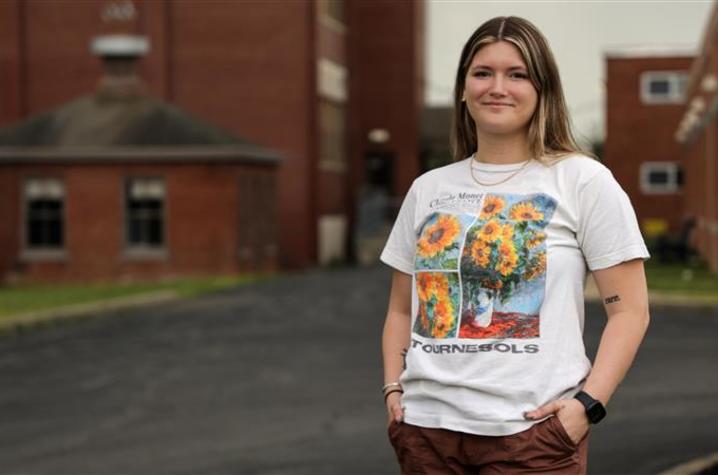
Raven Whitaker-Smith works at the DCCH Center for Children and Families — the same nonprofit organization that helped facilitate her foster care with the Smiths. UK Photo

As the state’s flagship, land-grant institution, the University of Kentucky exists to advance the Commonwealth. We do that by preparing the next generation of leaders — placing students at the heart of everything we do — and transforming the lives of Kentuckians through education, research and creative work, service and health care. We pride ourselves on being a catalyst for breakthroughs and a force for healing, a place where ingenuity unfolds. It’s all made possible by our people — visionaries, disruptors and pioneers — who make up 200 academic programs, a $476.5 million research and development enterprise and a world-class medical center, all on one campus.
Southern Bluegrass Citizen Review Panel Hosts Conversation on Collaboration

LEXINGTON, Ky. — The Southern Bluegrass Citizen Review Panel hosted A Conversation on Collaboration on April 25, an annual conference designed to support frontline social workers and foster parents. Over 60 attendees gathered at the Immanuel Baptist Church in Lexington to learn strategies to best support youth in out-of-home care.

This year’s conference theme centered on support and safety for older youth in foster care. Sessions included youth and substance use, medication and firearm safety, caring for children that have experienced trauma, collaborating with Children’s Advocacy Centers to increase positive outcomes for youth, and preventing child sexual abuse. Continuing Education credits were also offered through the Kentucky Board of Social Work.

A Conversation on Collaboration is designed to bring together viewpoints from across child welfare, especially frontline social workers and foster parents who are both integral for children’s success. The conference name comes from the panel’s belief that the best way to support children is through collaboration and communication across different system roles.

Additionally, the yearly conference serves as a way for the panel to give back to those that do such great work for Kentucky’s children and families. For National Child Abuse Prevention Month in April, the Southern Bluegrass Citizen Review Panel would like to thank and recognize the hard work of DCBS frontline workers, foster and adoptive parents, and child welfare professionals that work tirelessly to keep children safe.

Kentucky’s nine CRPs are facilitated by the University of Kentucky’s College of Social Work in collaboration with Kentucky’s Department for Community Based Services (DCBS). CRPs are groups of volunteers that work to improve the safety and well-being of children in Kentucky. For more information, please reach out to Tara Pulaski, the CRP Program Coordinator (Tara.Pulaski@uky.edu).

Jefferson Citizen Review Panel hosts Valentine’s Day community drive for youth in out-of-home care

LOUISVILLE, Ky. — On February 14, 2025, the Jefferson Citizen Review Panel (CRP) organized a community drive to re-stock a clothing closet for youth in out-of-home care in Jefferson County, Ky.

Hosted at the historic L&N Building in Louisville, the drive targeted highly needed items for the clothing closet. The Jefferson CRP partnered with the Department for Community Based Services (DCBS) to make the drive a reality, as the clothing closet is used by DCBS frontline workers when youth come into foster care.

Often, when children and youth enter foster care, they do not have all the items they need, including clothing and hygiene items. After consulting DCBS on the greatest need, the Jefferson CRP found that socks and undergarments are the most overlooked items for donations, creating a significant shortage for children. The panel believes that providing clean, comfortable essentials can greatly impact a young person’s health, confidence, and well-being.

Through donations from various non-profits, organizations, and caring individuals, the clothing closet received 500 donations for children of all sizes. They also received hundreds of crucial hygiene items. All the items will go directly to children and youth who have entered foster care in Jefferson County.

The panel also intentionally held their drive on Valentine’s Day, as they wanted children to feel cared for and supported on this day traditionally for love. In the future, Jefferson CRP and DCBS plan to have subsequent drives to keep the community closet stocked on an ongoing basis.

“I would like to shoutout all the Jefferson CRP members for their tremendous effort with this project,” CRP Program Coordinator, Tara Pulaski, said. “Members worked hard to promote the event to the community as well as support the closet by receiving donations. In particular, the panel’s Chair, Tiffany Keith, was instrumental in promoting the event through social media, live streams, and several Louisville radio stations.”

The Jefferson CRP would like to extend a heartfelt thank you to everyone that took the time to donate. All the received items and donations will give children in out-of-home care a sense of comfort.

Kentucky maintains nine regional Citizen Review Panels across the state. Each year, caring volunteers work together to support our child welfare system and make a difference for children and families across the Bluegrass.

Social Work’s Abigail Latimer and Lynden Bond selected as UK ASCEND Scholars

This article was originally published in UKNow.

LEXINGTON, Ky. (Jan. 14, 2025) — The University of Kentucky’s Achieving Success in Community-Engaged research to elimiNate Disparities (UK ASCEND) is pleased to announce the selection of its second and third cohorts of ASCEND Scholars.

Supported by a $3 million grant from the National Institute on Minority Health and Health Disparities of the National Institutes of Health (NIH) through the Specialized Centers of Excellence initiative (P50), UK ASCEND focuses on equipping research-intensive early-career faculty with the skills and resources to tackle health disparities through community-engaged research.

Led by a team of distinguished principal investigators — Nancy Schoenberg, Ph.D., Darwin Conwell, M.D., and Lovoria Williams, Ph.D. — UK ASCEND leverages the university’s Research Scholars Program (RSP) and Research Priority Areas (RPAs) to foster transdisciplinary research aimed at addressing health disparities in Kentucky and beyond.

“We developed this program based on the successes our faculty experienced as participants in the Research Scholars Program, a one-year long program that includes five levels of mentorship, professional development and networking,” Schoenberg said. “The ASCEND Scholars Program is a crucial addition to our faculty development programming, as it focuses on the critical need to build expertise in community-engaged research approaches. Community-engaged research is essential to move the needle on the serious health burdens we face.”

The two-year professional development program offers comprehensive training in community-engaged research. During the first year, scholars participate in the RSP while gaining access to workshops, conferences and coursework focused on community engagement. The second year provides funding for a $50,000 mentored and community-guided pilot project designed to translate research into actionable outcomes.

Support for scholars includes scientific mentorship, coaching and programming designed to advance their research careers while promoting meaningful collaboration with community forums.

A highly competitive application and selection process was followed to identify the second and third cohorts of scholars. Individuals were chosen as ASCEND scholars based on their potential to become highly successful community-engaged researchers and the merit of their proposed pilot projects. This process was led by the co-directors of the Investigator Development Core, Kevin Pearson, Ph.D., and Carolyn Lauckner, Ph.D.

“We had a large number of highly qualified faculty applicants from multiple colleges, and this highlights UK’s strengths and continued recruitment of junior faculty but also the need for a program like ASCEND,” Pearson said.

UK ASCEND recognizes its three cohorts of scholars.

Inaugural cohort

Second cohort — beginning Feb. 1, 2025:

Third cohort — beginning Feb. 1, 2026:

  • Lynden Bond, Ph.D., assistant professor, College of Social Work
  • Delvon Mattingly, Ph.D., assistant professor, Department of Behavioral Science, College of Medicine
  • Ketrell McWhorter, Ph.D., assistant professor, Department of Neurology, College of Medicine

By integrating research excellence with community-driven approaches, UK ASCEND underscores the University of Kentucky’s commitment to eliminating health disparities in underserved populations in Kentucky, the nation and the world.

Research reported in this publication was supported by the National Institute on Minority Health and Health Disparities of the National Institutes of Health under Award Number P50MD019476. The content is solely the responsibility of the authors and does not necessarily represent the official views of the National Institutes of Health.

As the state’s flagship, land-grant institution, the University of Kentucky exists to advance the Commonwealth. We do that by preparing the next generation of leaders — placing students at the heart of everything we do — and transforming the lives of Kentuckians through education, research and creative work, service and health care. We pride ourselves on being a catalyst for breakthroughs and a force for healing, a place where ingenuity unfolds. It’s all made possible by our people — visionaries, disruptors and pioneers — who make up 200 academic programs, a $476.5 million research and development enterprise and a world-class medical center, all on one campus.

‘Behind the Blue’: The psychology behind sports rivalries, why we love to loathe the other team

This article and podcast was originally published by Lindsey Piercy and Kody Kiser of UKNow.


What drives the fierce passion of sports rivalries? From loyalty and identity, to the thrill of competition, explore the psychology fueling these intense connections and conflicts by listening to this edition of “Behind the Blue.”

LEXINGTON, Ky. (Dec. 13, 2024) — Fans, dressed from head to toe in their team’s colors, swarm the stadium chanting fight songs and waving banners.

It’s game day, and the stakes feel monumental.

Sports rivalries are a cornerstone of athletic culture — sparking packed bleachers, passionate debates and unforgettable moments.

But what drives the fervor that fans feel for their team and the disdain for their rivals? Experts suggest the answer lies not just in the scoreboard, but in the human psyche.

According to Matt Moore, associate dean of academic and student affairs in the University of Kentucky College of Social Work (CoSW), and Tarkington Newman, director of CoSW Sport Social Work Research Lab, rivalries are more than competition; they’re a powerful blend of identity, emotion and instinct.

The CoSW recently announced the launch of the Sport Social Work Collaborative — a partnership between the Alliance of Social Workers in Sports (ASWIS), the Sport Social Work Journal and the college’s Sport Social Work Research Lab. The goal is to advance sport social work as a distinct specialization within the social work profession.

The collaborative is focused on leading research, teaching and outreach efforts that seek to promote the healthy development of athletes, coaches and communities. The CoSW is also home of the International Institute on Sport Social Work.

“The collaborative spans everything from community-based youth development programs, high school sports, to collegiate athletics,” Newman said. “But ultimately, the lab is committed to maximizing sports and promoting healthy experiences and development. It’s a place for exploration — understanding what sports are, what they can be, and giving students the opportunity to engage and lead research experiences.”

On this edition of “Behind the Blue,” Moore and Newman, who are both part of the collaborative, explore the psychology behind sports rivalries — why we love our teams as fiercely as we loathe the opposition, and why this drama keeps us coming back for more.

Rivalries and social identity

Sports rivalries are deeply rooted in social identity theory, which suggests that people gain self-esteem from being part of a group.

A rival team serves as the “out-group,” creating a clear “us vs. them” dynamic. This contrast strengthens loyalty to one’s own team and builds a sense of community among fans.

“Fans really do come in knowing that this is going to be the big rivalry game for us, and they get themselves to believe it,” Moore explained. “Whether or not you think it should be a rivalry, because of the media attention and how much it means to the community, it becomes a part of the fabric of who you are.”

The role of emotions

Rivalries evoke intense emotions that keep fans engaged.

From exhilaration to frustration, the hype is heightened when the opponent is a long-standing rival. And this emotional investment strengthens fans’ connection to their team and the rivalry itself.

“A lot of it hinges on identity — my identity is tied to this sport, this team and the success we have, either as individuals or a collective group,” Moore said. “When things go against that identity, it causes reactions that don’t always show our best selves.”

“I also think it goes back to relationships,” Newman added. “When you trace rivalry games — whether high school, college or professional — it often goes back to relationships between players or coaches, both good and bad.”

Geography and history

Many rivalries stem from regional pride and a shared history of fierce competition. Teams located near each other often face-off more frequently, and these repeated matchups can intensify tensions over time.

“Obviously, history and culture play a factor in creating rivalries,” Moore continued. “When schools or programs have had longstanding success, rivalries naturally form. And that often transcends for years, decades, even, which is a thing of beauty.”

The dark side of rivalries

While rivalries can create excitement and camaraderie, they can also escalate into hostility or even violence. Studies show that fans are more likely to exhibit aggressive behavior toward rival teams or their supporters.

Psychologists caution that this aggression often stems from deindividuation — when people in a group setting lose their sense of individual responsibility.

“We emphasize certain rivalry games so much that we don’t always think about how to respond if things don’t go our way,” Newman said. “At the end of the day, it’s just a game. Sometimes we let rivalries become too much of our identity, relationships and emphasis.”

“There’s great research on how spectator behavior impacts the well-being of athletes,” Moore added. “It’s scary to think that athletes and coaches are subjected to harmful behaviors. Fans get fired up, but we need to remember that behind the jerseys and helmets are real people — humans with struggles beyond sports. While athletes have incredible talents, they still deal with the same human challenges as anyone else.”

Why we keep coming back

Despite the emotional highs and lows, fans return to rivalry games season after season. Rivalries offer a sense of drama, continuity, and identity that few other experiences can match.

As fans gear up for their next big rivalry game, it’s worth remembering that the intensity they feel is rooted in a mix of psychology, culture, and human nature. So, whether it’s cheering for the home team or booing the rival, the drama of competition continues to captivate us all.

“Sports are powerful because they have a shared language,” Newman said. “You can go to another country, not speak the language, but if there’s a soccer ball on the ground, you both know what to do with it. It’s an opportunity to engage with each other through this shared experience.”

“Sport is one of the few things that can unite mass groups of individuals,” Moore continued. “Sport can be a driving force for communities impacted by disaster or political strife — bringing people together. Ultimately, it’s a common language that transcends boundaries and borders.”

You can listen to the full interview with Moore and Newman by clicking the play button above.