
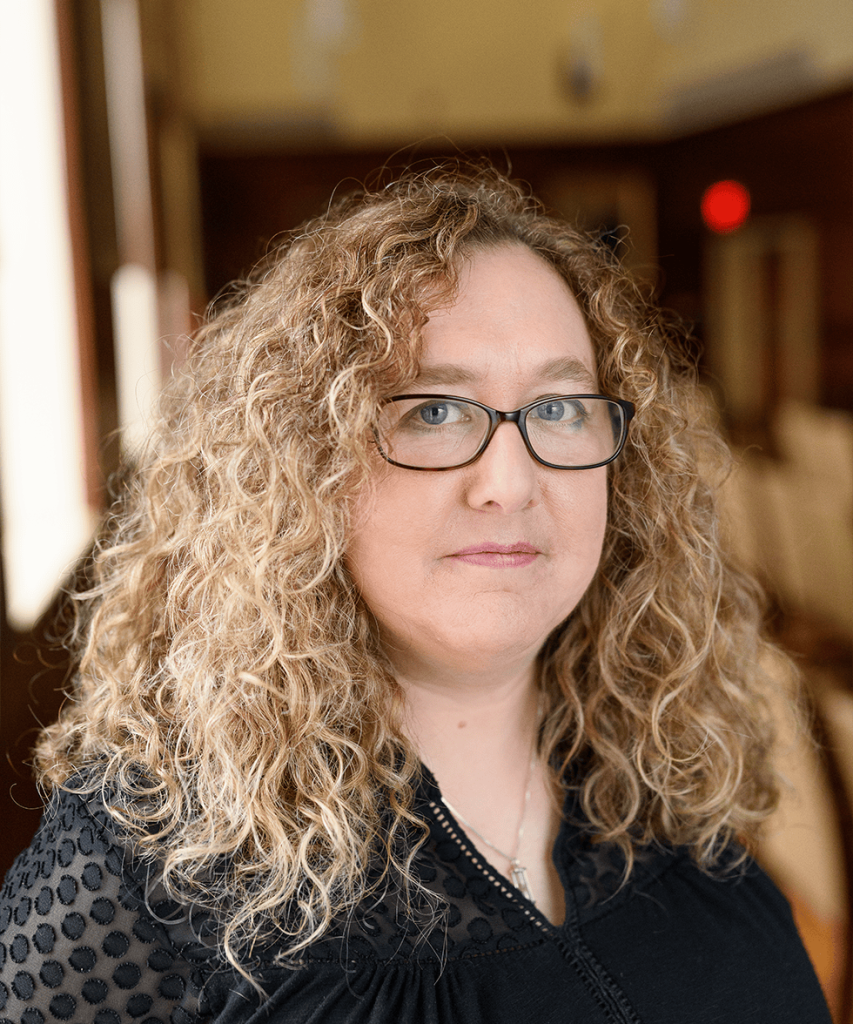
Sarabeth Biermann
Senior Lecturer
Areas of Expertise
- SW 222 (Development of Social Welfare)
- SW 421 (Human Behavior & the Social Environment I)
- SW 422 (Human Behavior and the Social Environment II)
- SW 435 (Foundations of Professional Ethics in Social Work)
- SW 445 (Field Practicum II)
Highlighted Publications
- Biermann, S. L. & Leukefeld, C. G. (2021). Drug and alcohol addiction. In L. Kaye (Ed.), Handbook of Rural Aging. New York, NY: Routledge.
- Biermann, S. L. & Leukefeld, C. G. (2018). Adolescent self-help in substance abuse interventions. In T. Gullotta & C. Leukefeld (Eds.), Adolescent Substance Abuse: Evidence-Based Approaches to Prevention & Treatment, 2nd Edition. New York, NY: Springer.
- Biermann, S. L. (2014). Well-Being: Promoting Well-Being in Adolescence. In T. Gullotta & M. Bloom (Eds.), Encyclopedia of Primary Prevention and Health Promotion, 2nd Edition (pp. 1575-1582). New York, NY: Springer-Verlag.
Student & Research Availability
- Research or Interest Area Key Words: Pedagogy, Andragogy, Online learning, Innovative instruction, Social work ethics
Alma Mater
University of Kentucky
Get to Know Sarabeth
Dr. Biermann is a Senior Lecturer in the UK College of Social Work. She joined the faculty full time in 2014. Prior to her full-time appointment, she taught courses for the College as an adjunct instructor. Dr. Biermann earned her MSW in 1997 and her PhD in 2012, both from the University of Kentucky College of Social Work. Her dissertation research focused on human capital acquisition among women with low incomes. Dr. Biermann’s professional experience includes both social work practice and research. She began her professional social work career as a clinical research assistant collecting data through structured clinical interviews on a federally funded schizophrenia outcomes research project. That position piqued her interest in finding answers to questions about social problems and social justice issues, so she transitioned into direct social work practice to gain a better understanding of social service systems. During that time, she worked for three years as an in-home family preservation therapist. She then held a position as a case manager for six years where she worked with TANF recipients, and had another position for nearly four years as program coordinator for TANF recipients. In these two positions, she supported individuals who were attending college to build their human capital with the goal of better supporting their children and themselves. During her direct practice, she learned a great deal about challenges faced by individuals who are involved with a variety of social service systems. At that point, she decided to return to the College of Social Work to earn her PhD. During that time, she worked as a research program coordinator. She collected data through structured interviews with women in residential substance abuse treatment in order to evaluate the enhanced treatment services they were receiving. Dr. Biermann transitioned from this role to a drugs and alcohol project director role in which she was responsible for directing and coordinating three federally-funded evaluation studies of enhanced substance abuse treatment services for women. After two years, Dr. Biermann joined the College of Social Work faculty and has enjoyed teaching policy, theory, practicum, senior capstone, and ethics courses across the bachelor and master’s degree programs. Her biggest professional joy is supporting students as they work to become ethical social work practitioners.