
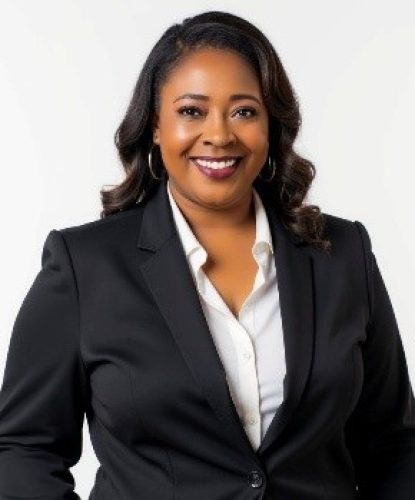



LEXINGTON, Ky. — Yolanda Massey-McCullough, MSW, a Doctor of Social Work (DSW) candidate and lecturer at the University of Kentucky College of Social Work, will present her capstone research during the College’s three-day Virtual Showcase of DSW Scholars, held April 27–29, 2026.
Massey-McCullough’s work examines how incorporating empathy and emotional regulation into law enforcement training can improve decision-making, de-escalate conflicts and strengthen community trust and safety.
As policing continues to evolve, so does the need for training that builds interpersonal and emotional intelligence skills. Massey-McCullough’s research emphasizes that empathy and emotional regulation are not just innate traits, but skills that can be developed—helping officers remain calm under pressure and better understand the experiences of others.
Her capstone project explores the effectiveness of these trainings, demonstrating their potential to improve outcomes during high-stress encounters and address gaps in traditional law enforcement training.
“This work is informed by current events that continue to highlight instances where force is being use,” Massey-McCullough said. “It demonstrates how emotional regulation and empathy can de-escalate encounters that otherwise may rely on excessive force.”
While officers are often equipped with tactical skills and authority, far less emphasis is placed on the interpersonal tools needed to safely navigate high-stress interactions. This imbalance, she argues, has contributed to overreliance on force and challenges within building trust within communities.
Her findings point to a clear opportunity for change: introducing empathy and emotional regulation training early in an officer’s development—before they assume full enforcement responsibilities—may significantly reduce negative and escalated encounters.
Beyond individual interactions, the project highlights a broader systems-level solution. By integrating social workers as trainers within law enforcement agencies, departments can adopt more human-centered approaches while strengthening interdisciplinary collaboration.
“This work impacts individuals, families and entire communities by promoting safer interactions,” Massey-McCullough said. “It also influences systems by positioning social workers as key partners with community policing efforts.”
Through the capstone process, Massey-McCullough said her perspective on social work practice has expanded—reinforcing the role of social workers as change agents capable of positively influencing complex systems, including law enforcement.
Looking ahead, she plans to pursue a master’s degree in criminal justice to deepen her expertise and expand this work, with the goal of advancing safer, more sustainable approaches to policing.
Her message is clear:
“Real change in public safety will not come from more force, but from more humanity; when empathy becomes as essential to policing as authority, communities will no longer have to choose between safety and justice.”
Note: The perspectives presented in this research are those of the individual scholar and do not necessarily reflect the views of the University of Kentucky.