
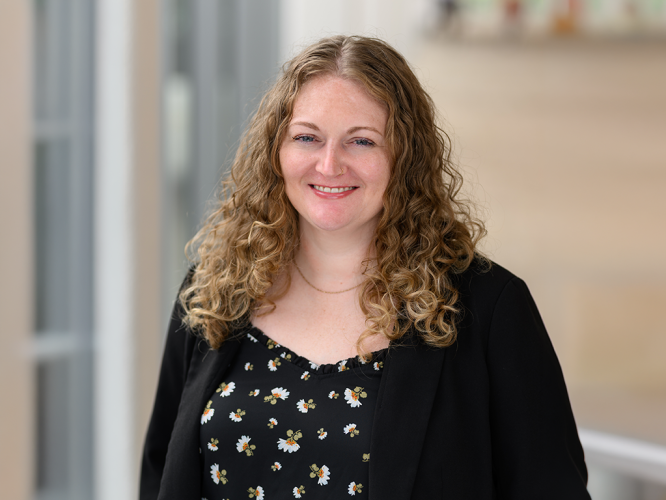



LEXINGTON, Ky. – Throughout National Social Work Month and National Criminal Justice Month in March, the University of Kentucky College of Social Work (CoSW) shared stories on the humans of the CoSW, highlighting the critical role our people play in supporting individuals, families and communities across Kentucky and beyond.
For University of Kentucky College of Social Work Assistant Professor Dr. Nicole McKenna, her path to the criminal justice field is personal.
Growing up, she watched family members move in and out of the justice system, often beginning with low-level offenses that escalated over time. Through conversations with a loved one serving a sentence, she began to understand the deeper role trauma played in shaping those outcomes. That understanding only deepened in college, when she worked as a case manager supporting women returning from prison, nearly all had experienced significant trauma throughout their lives.
“Between my personal experiences, my professional work, and what I was learning in the classroom, I knew I wanted to dedicate my career to understanding trauma and the criminal justice system,” McKenna said.
Today, her work centers on participatory research, an approach that engages people directly impacted by the system as partners in the research process. In a recent project examining reentry, formerly incarcerated men helped design the study, conduct interviews, and share findings. At a community reentry meeting earlier this year, participants presented their experiences to a room filled with peers and loved ones.
“Hearing them talk about their journeys and how research can be empowering, it was incredible,” she said.
McKenna hopes her research will shift how systems respond to individuals by recognizing the full impact of trauma, both before and during system involvement. From childhood adversity to the experience of incarceration itself, she emphasizes the need for approaches that prioritize prevention, healing, and support.
“By recognizing these experiences, we can begin to prevent them,” she said, pointing to community-based programs, restorative justice practices, and efforts to reduce incarceration as critical steps forward.
At the CoSW, McKenna has found a collaborative environment to grow this work, crediting both her colleagues and students for shaping her experience.
“I’m blown away by the questions students ask and the conversations we have,” she said.
She also encourages future criminal justice professionals to listen closely to those most impacted by the system.
“You’ll be making decisions that affect their lives,” she said. “It’s critical to understand their experiences. Read their stories and hear from them directly.”
For McKenna, National Criminal Justice Month is an opportunity to highlight the broader impact of this work.
“So often, we hear about the negative aspects of criminal justice,” she said. “But there is so much meaningful, impactful work being done in this field. National Crimina Justice Month gives us a chance to highlight that.”