



LEXINGTON, Ky. – Throughout National Social Work Month and National Criminal Justice Month this March, the University of Kentucky College of Social Work (CoSW) will be sharing stories on the humans of the CoSW, highlighting the critical role our people play in supporting individuals, families and communities across Kentucky and beyond.
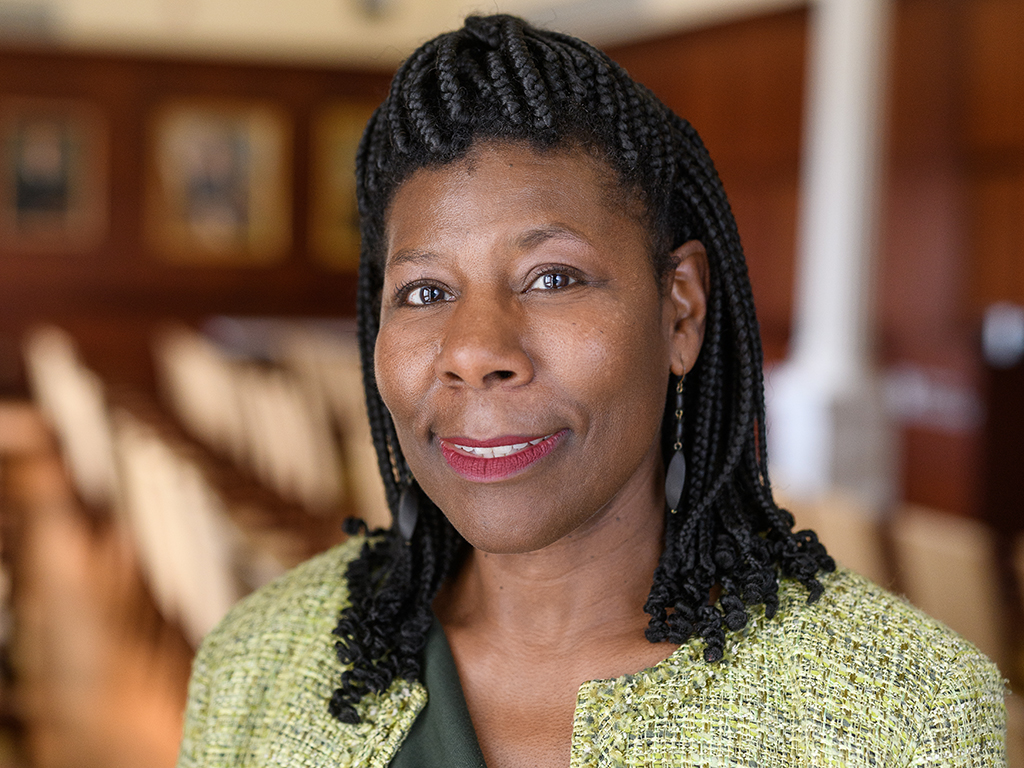
Celebrating 30 years of service at the University of Kentucky, Tamikia Dumas, Foster Parent Mentor Program (FPMP) Coordinator, reflects on the program’s growth, as well as the fulfillment of helping others through her position at the College. Beginning her career in Human Resource Development at UK, Dumas came to the CoSW 24 years ago to join the FPMP.
As the FPMP Program Coordinator for the Western Regions, Dumas works with foster parent mentors and mentees, completing matches for newly approved foster parents. When a mentor accepts the match, she provides contact information to the mentee, mentor, Recruitment and Certification (R&C) worker, and staff support so that the match can be entered and maintained in the mentor portal.
Dumas also spends time talking with foster parents who have been recommended as mentors and being a sounding board for both mentors and mentees. Dumas shares that working to get newly approved foster parents matched with a mentor is one of her favorite parts.
“My goal is always to do what I can to help foster parents,” Dumas said. “I enjoy the opportunity to coordinate and plan training for foster parents. I enjoy seeing or hearing from mentors the joy and excitement for having been able to help their mentee through a difficult situation. I do my job because I enjoy helping others. It’s rewarding to hear from a mentor or mentee that what I did for them made a difference.”
The Foster Parent Mentor Program specializes in one-on-one, short-term, intensive coaching relationships, which provide newly approved foster parents emotional encouragement, skill reinforcement, and parenting strategies unique to providing out-of-home care to enhance the quality of care provided and stabilize placements.
As the program has grown, Dumas hopes foster parents continue to gain confidence in their abilities to provide for the needs of the children placed in their home, due to the support they received from their mentors.
“At the conclusion of the mentor match, I want mentees to see their mentor as someone who was available, encouraged them, provided guidance and listened to them when they needed it the most,” Dumas shared.
For Dumas, the mentor program has continued to evolve over the years to better support foster families from the very beginning of their journey. When the program first launched, newly approved foster parents were connected with mentors only after receiving their first placement. Today, families are matched with a mentor immediately upon approval, giving them a resource to turn to before a child enters their home.
That early connection helps reduce stress and prepare foster parents for the realities of their first placement, something Dumas has seen make a meaningful difference.
“The advice I give to new foster parents is to take advantage of the support, knowledge and experience they will receive from their mentor,” Dumas said. “I encourage them to be engaged in the mentoring process and let their mentor know when they need help. Foster parents shouldn’t suffer in silence.”
After three decades at UK, Dumas says the most rewarding moments often come at the end of a mentoring relationship, when the uncertainty she hears in a foster parent’s voice during their first conversation has been replaced with confidence and hope.
“It’s uplifting to talk with a new foster parent at the end of their mentor match and hear joy and peace in their voice that wasn’t there during the first conversation,” Dumas said. “Foster parents give a lot of themselves to help children in care. I want them to know they are heard, appreciated and not alone.”