





All you need to know in
OCTOBER
- IPV Insights from Stephanie Ratliff
- Upcoming scademic deadlines, save the dates!
- CoSW Pop-Up Shop, closing October 22nd.
Read below and stay up to date in all things College of Social Work!


Stephanie Ratliff
Assistant Director of Field Education & Clinical Faculty
Now is the time to seize opportunities to build your knowledge and develop the skills needed to recognize and respond to intimate partner violence (IPV).
READ FULL LETTER
Now is the Time: A Call to Recognize and Respond to Intimate Partner Violence
It was March 1997. My friend Kristen and I finished another long Thursday night psychopathology class, a required course for UK MSW students. As we walked to our cars, we complained about our vending machine dinners and whined about how tired we were, then we got in our cars and went our separate ways. I went home and worked on a policy paper. Kristen went home and was murdered by her long-term boyfriend. He shot her and then turned the gun on himself. Just like that, she was gone. In May 1997, my peers and I walked across the stage to receive our MSW degrees without Kristen. We wore tiny yellow satin ribbons to remember her. Yellow was her favorite color.
Each October, social workers and other advocates raise awareness about intimate partner violence (IPV). IPV, also known as domestic violence, affects people of all genders, cultures, ages, sexual orientations, races, ethnicities, and socioeconomic levels. Power and control are core constructs of IPV and without intervention the violence recurs and escalates. In the U.S., more than half of all female homicide victims are murdered by a current or former intimate partner (Petrosky et al., 2018).
Now is the time to seize opportunities to build your knowledge and develop the skills needed to recognize and respond to IPV. Undoubtedly, no matter what practice setting you choose after graduation, you will encounter IPV. During your social work education journey, aim to increase your confidence and competence in this area of practice by integrating the following strategies:
1) Use empowerment, intersectionality, and socio-ecological theories to inform your understanding and practice approach
2) Ground your IPV knowledge in peer-reviewed research and dispel damaging myths
3) Choose a practicum placement with opportunities to serve clients and client systems affected by IPV, and
4) Enroll in SW 519: Understanding Intimate Partner Violence
This October, make time to participate in domestic violence awareness month activities in your area. Wear purple on Thursday, October 19th. Participate in an anti-violence march. Donate to your local domestic violence shelter. However, if you do nothing else, remember the names of those murdered by an intimate partner, commit to supporting survivors, and work to end IPV.
Petrosky, E., Blair, J. M., Betz, C.J., Fowler, K. A., Jack, S.P., & Lyons, B.H. (2017). Racial and ethnic differences in homicides of adult women and the role of intimate partner violence — United States, 2003–2014. MMWR Morbidity Mortality Weekly Report 2017, 66:741–746. DOI: http://dx.doi.org/10.15585/mmwr.mm6628a1External.
Now is the Time: A Call to Recognize and Respond to Intimate Partner Violence
It was March 1997. My friend Kristen and I finished another long Thursday night psychopathology class, a required course for UK MSW students. As we walked to our cars, we complained about our vending machine dinners and whined about how tired we were, then we got in our cars and went our separate ways. I went home and worked on a policy paper. Kristen went home and was murdered by her long-term boyfriend. He shot her and then turned the gun on himself. Just like that, she was gone. In May 1997, my peers and I walked across the stage to receive our MSW degrees without Kristen. We wore tiny yellow satin ribbons to remember her. Yellow was her favorite color.
Each October, social workers and other advocates raise awareness about intimate partner violence (IPV). IPV, also known as domestic violence, affects people of all genders, cultures, ages, sexual orientations, races, ethnicities, and socioeconomic levels. Power and control are core constructs of IPV and without intervention the violence recurs and escalates. In the U.S., more than half of all female homicide victims are murdered by a current or former intimate partner (Petrosky et al., 2018).
Now is the time to seize opportunities to build your knowledge and develop the skills needed to recognize and respond to IPV. Undoubtedly, no matter what practice setting you choose after graduation, you will encounter IPV. During your social work education journey, aim to increase your confidence and competence in this area of practice by integrating the following strategies:
1) Use empowerment, intersectionality, and socio-ecological theories to inform your understanding and practice approach
2) Ground your IPV knowledge in peer-reviewed research and dispel damaging myths
3) Choose a practicum placement with opportunities to serve clients and client systems affected by IPV, and
4) Enroll in SW 519: Understanding Intimate Partner Violence
This October, make time to participate in domestic violence awareness month activities in your area. Wear purple on Thursday, October 19th. Participate in an anti-violence march. Donate to your local domestic violence shelter. However, if you do nothing else, remember the names of those murdered by an intimate partner, commit to supporting survivors, and work to end IPV.
Petrosky, E., Blair, J. M., Betz, C.J., Fowler, K. A., Jack, S.P., & Lyons, B.H. (2017). Racial and ethnic differences in homicides of adult women and the role of intimate partner violence — United States, 2003–2014. MMWR Morbidity Mortality Weekly Report 2017, 66:741–746. DOI: http://dx.doi.org/10.15585/mmwr.mm6628a1External.

DATES TO NOTE…December Graduation, Class Withdrawal, Priority Registration and more!DECEMBER GRADUATIONIf you plan to complete your educational program in December 2023, the deadline to apply for your degree is November 1st. The degree application is completed in myUK under Student Services > myRecords. WITHDRAWAL DEADLINEThe last day to withdrawal from a full term fall class is November 1st. After this date, students are only permitted to withdraw for urgent non-academic reasons. PRIORITY REGISTRATIONPriority registration for the Spring 2024 semester begins October 30th. Connect with your academic advisor if you have questions about your curriculum plan or registration. Your academic advisor’s information can be found in myUK under “Degree Planning and Registration”. ADVISING DROP IN HOURSThe College of Social Work Advising team offers drop in advising for students in all CoSW programs on Mondays from 3-4pm.JOIN ON ZOOM
Previous slide
Next slide
MIDTERM ADVISING TIP…
From advisor Rebecca Meeks
TAKE A MOMENT
Assess what you have accomplished and learned so far in the semester. Take some time to communicate with your instructors if there are any areas of the content or assignments that are unclear or if your grades are not meeting your own goals or expectations. Make time for self-care during fall break and celebrate even the small victories. Submitting your assignments on-time when there may be so many other things going on in your life, making a higher than expected grade on an assignment, or even finishing that assignment early are worthy of celebration.
DSWSC (Doctor of Social Work Support Community) Monthly Meeting
Tuesday, October 24, 2023 | Zoom | 8pm
UPCOMING EVENTS
FIELD ESSENTIALS SESSION
November 1, 2023, is the target deadline to secure your spring 2024 field education placement.
Start planning your placement by attending a Field Essentials Session. Join us for an hour of valuable information that will assist you in planning your field education journey. Virtual sessions are led by a member of the UK College of Social Work Field Team and occur on Wednesdays at 12:00 (noon) PM EST.
REGISTER
12 – 1PM
CoSW POP-UP SHOP
The CoSW pop-up shop is now open in recognition of CoSW’s 85th Anniversary and SWAA’s celebration of Homecoming 2023. The shop includes some classic apparel items as well as special edition 85th anniversary t-shirts. Place your orders by Oct. 22.
SHOP NOW
CLOSES 10/22


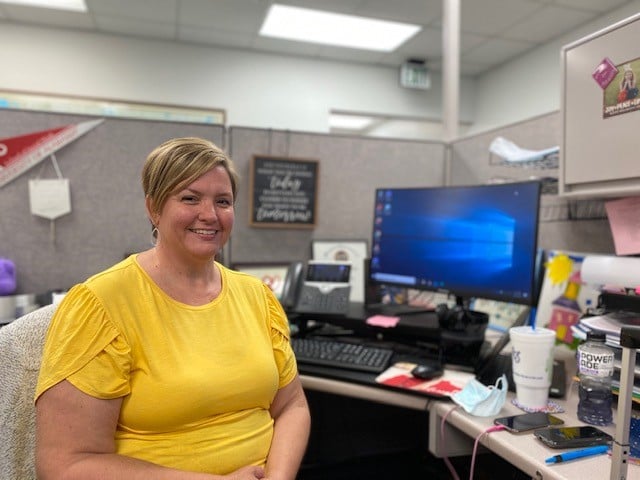
Donna Hornsby, DSW Student
Donna Hornsby, current DSW student, is currently a Management Consultant for Public Knowledge®, LLC, Hornsby is responsible for the project management for the child welfare training project and is a content expert in child welfare on several projects. Additionally, Hornsby holds 28 years of social work experience with time spent in the Mobile County Public Schools (AL) system.
Hornsby recently completed her Scholarly Personal Narrative from Intro to Doctoral Studies (SW852) with her husband’s oncologist. As a result, narrative sparked the interest of UAB oncology department, initiating an initiative to create a caregiver support center! Kudos to Donna!

NEWS & TRENDING TOPICS
NASW offers its support to those who lost loved ones in terrorist attacks in Israel – NASW
ARH, UK Social work partnering on education program for behavioral health workforce development – Floyd County Chronicle
Children’s carnival much bigger than games, crafts (Ashland, KY) – Yahoo news
NASW offers its support to those who lost loved ones in terrorist attacks in Israel – NASW
ARH, UK Social work partnering on education program for behavioral health workforce development – Floyd County Chronicle
Children’s carnival much bigger than games, crafts (Ashland, KY) – Yahoo news
TELL US MORE!
Have something you would like to include in the upcoming newsletter? Submit the form below.
Oops! We could not locate your form.